

What about Wales and Northern Ireland?
The 9-1 grading system is used in England. If you are studying in a different part of the UK, the grading looks different.
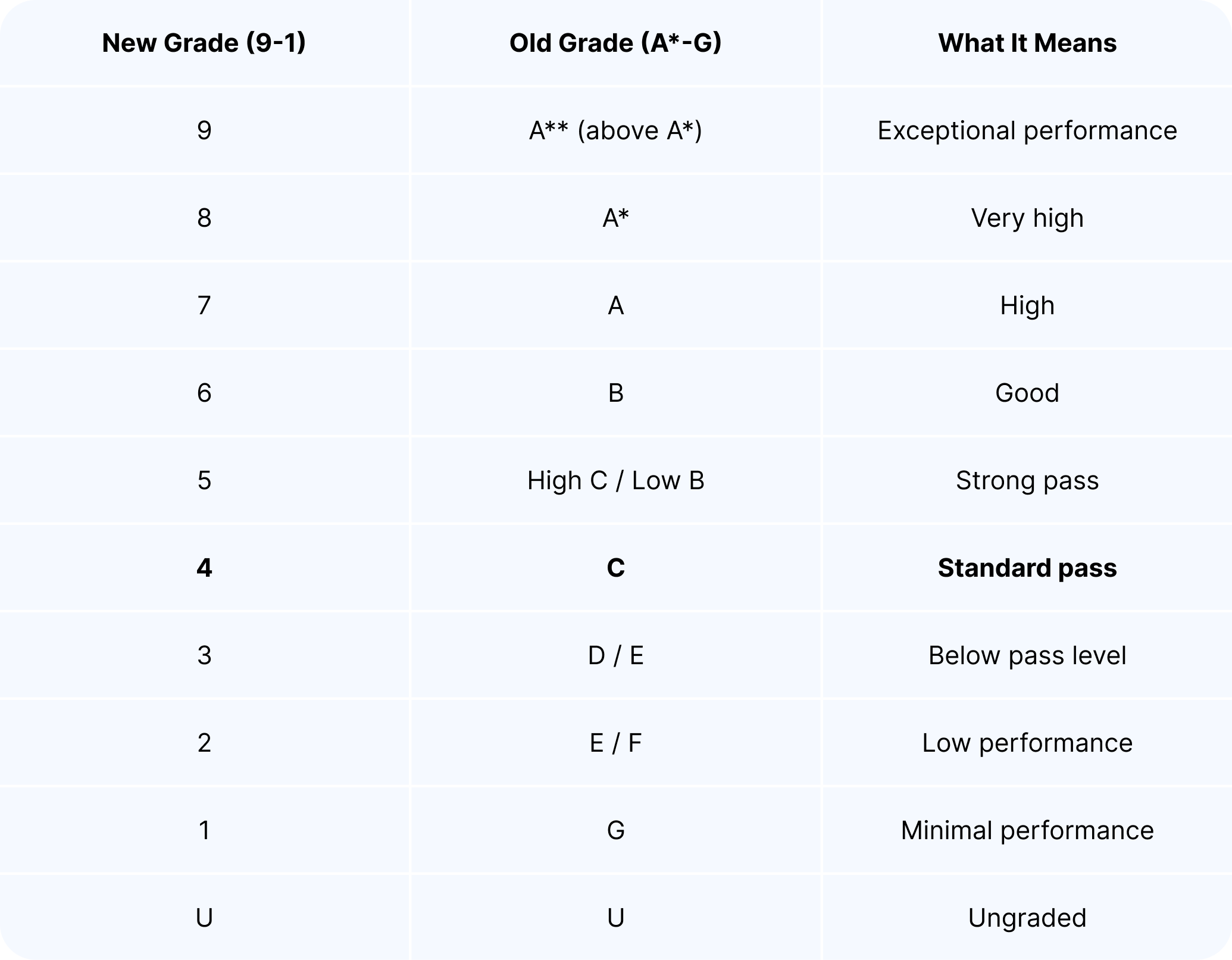
Wales still uses the old A* to G system. A grade C is the standard pass in Wales, which is the equivalent of a 4 in England. WJEC is the main exam board in Wales.
Northern Ireland uses a mix of systems. CCEA, the Northern Ireland exam board, introduced a nine-point scale that runs from A* to G, with a new grade C* added to sit between B and C. Some schools in Northern Ireland also use English exam boards like AQA or Edexcel, which means those students receive 9-1 grades.
If you are unsure which system applies to you, speak to your school or check your exam board's website.
Is grade 4 enough? The "Standard Pass" vs "Strong Pass" question
This is where a lot of the confusion comes from, and it is a fair question to ask.
A grade 4 is a pass. But a grade 5 is a strong pass, and many sixth forms and colleges set grade 5 as their entry bar, especially for A-level subjects. Some competitive sixth forms ask for grade 6 or above in the subjects you want to study further.
Here is what grade 4 typically means in practice:
For sixth form and college: Most sixth forms and colleges ask for at least five GCSEs at grade 4 or above, including English Language and Maths. Grade 4 gets you through the door for many courses, but A-level entry often requires grade 5 or higher in the subject you want to study.
For apprenticeships: Many apprenticeships ask for grade 4 or above in English and Maths as a minimum.
For employment: Most employers look for at least grade 4 in English and Maths. Grade 4 is widely seen as the baseline for showing you have solid literacy and numeracy skills.
For English and Maths specifically: These two subjects carry extra weight. If you do not reach grade 4 in either, you are required to keep studying them after Year 11 until you pass or turn 18. This is a government rule, not just a school policy.
So a grade 4 gives you a solid foundation. But if you are aiming for A-levels or a competitive course, pushing for a 5 or above will keep more doors open.
What if you get a grade 3 or below?
Grades 1, 2, and 3 are not passes under the current system. They show that a student has sat the exam but has not reached the standard pass level.
For most subjects, there is no requirement to resit if you do not reach grade 4. You have the flexibility to move on and take different qualifications. English Language and Maths are the exception. Under the government's condition of funding policy, students who have not achieved at least a grade 4 in those subjects must continue to study them as part of their post-16 education. Many colleges offer free GCSE English and Maths courses for 16 to 18-year-olds who need to resit.
Resits for English Language and Maths usually take place in November each year, as well as in the summer series. If you or your child missed the grade, there is a clear path to try again
Grade boundaries: how many marks do you need?
Grade boundaries are the number of marks you need to reach each grade. They change every year depending on how difficult the exam was and how students performed overall. Exam boards set the final boundaries after the exams, so you cannot know the exact number in advance.
That said, here is a general guide based on recent years:
It is important to remember that grade boundaries change every year. The figures below are based on recent past exams and should be used as a guide only, not as fixed targets.
For GCSE Maths (Foundation tier, AQA 2024):
- Grade 4: around 147 out of 240 marks
For GCSE English Language (AQA 2024):
- Grade 4: around 82 out of 160 marks
For GCSE English Language (Edexcel 2024):
- Grade 4: around 94 out of 160 marks
These numbers shift each year slightly. The safest approach is to aim well above the boundary so that small changes in difficulty do not affect your result. You can find official grade boundaries for each exam board on their websites:
- AQA grade boundaries
- Edexcel grade boundaries
- OCR grade boundaries
- WJEC grade boundaries
- CCEA grade boundaries
How to move from a grade 4 to a grade 5 or above
The gap between a grade 4 and a grade 5 is smaller than you might think.
Here are the key things that separate a grade 4 answer from a grade 5 and above:
Know the mark scheme inside out.
Examiners mark against a set of specific points. Students who score higher are not necessarily the ones who know more; they are the ones who understand exactly what the examiner wants to see and make sure every answer includes it. Before you practise any question, look at the mark scheme first.
Answer the question that is asked, not the one you wished had been asked.
One of the most common reasons students drop marks is going off-topic. Read each question carefully, underline the key words, and make sure every sentence in your answer is directly relevant.
Develop your points further.
A grade 4 answer often makes a correct point but does not fully explain it. A grade 5 answer takes that same point and adds a clear explanation or example to back it up. Think of it as: make the point, explain it, and show why it matters.
Practise under timed conditions.
It is not enough to know the material. You need to be able to recall it and write a clear answer in the time given. Regular timed practice makes the real exam feel familiar and helps you stop running out of time.
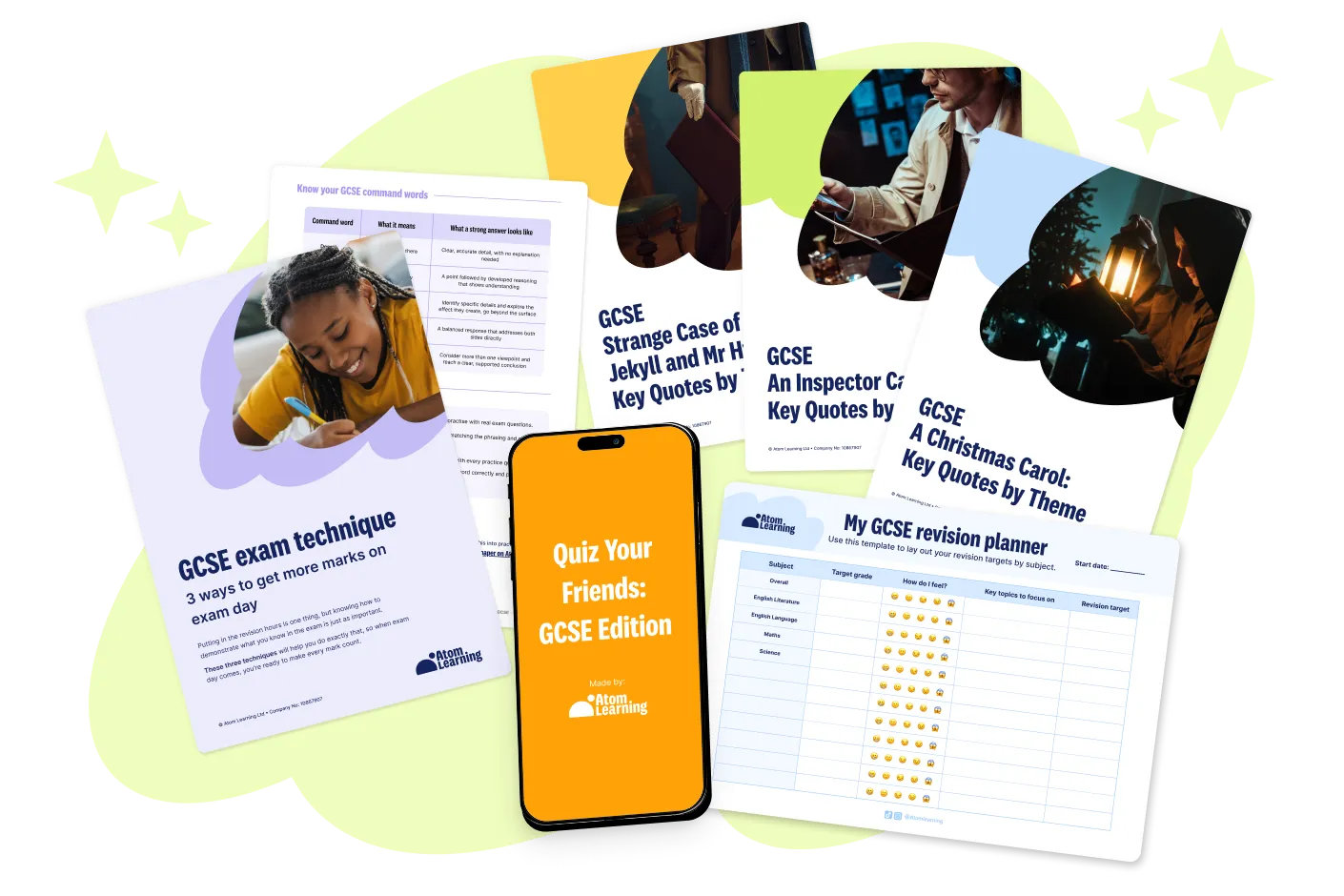
Want to turn your revision into marks on the page? Download our free guide to GCSE exam technique and learn three ways to score higher on exam day. Get the free guide here.
Start Revising With a Clear Goal in Mind
Knowing what a grade 4 means is just the starting point. Whether you are working towards a 4, a 5, or higher, every mark you gain from here comes from understanding what examiners want and practising until it feels natural.
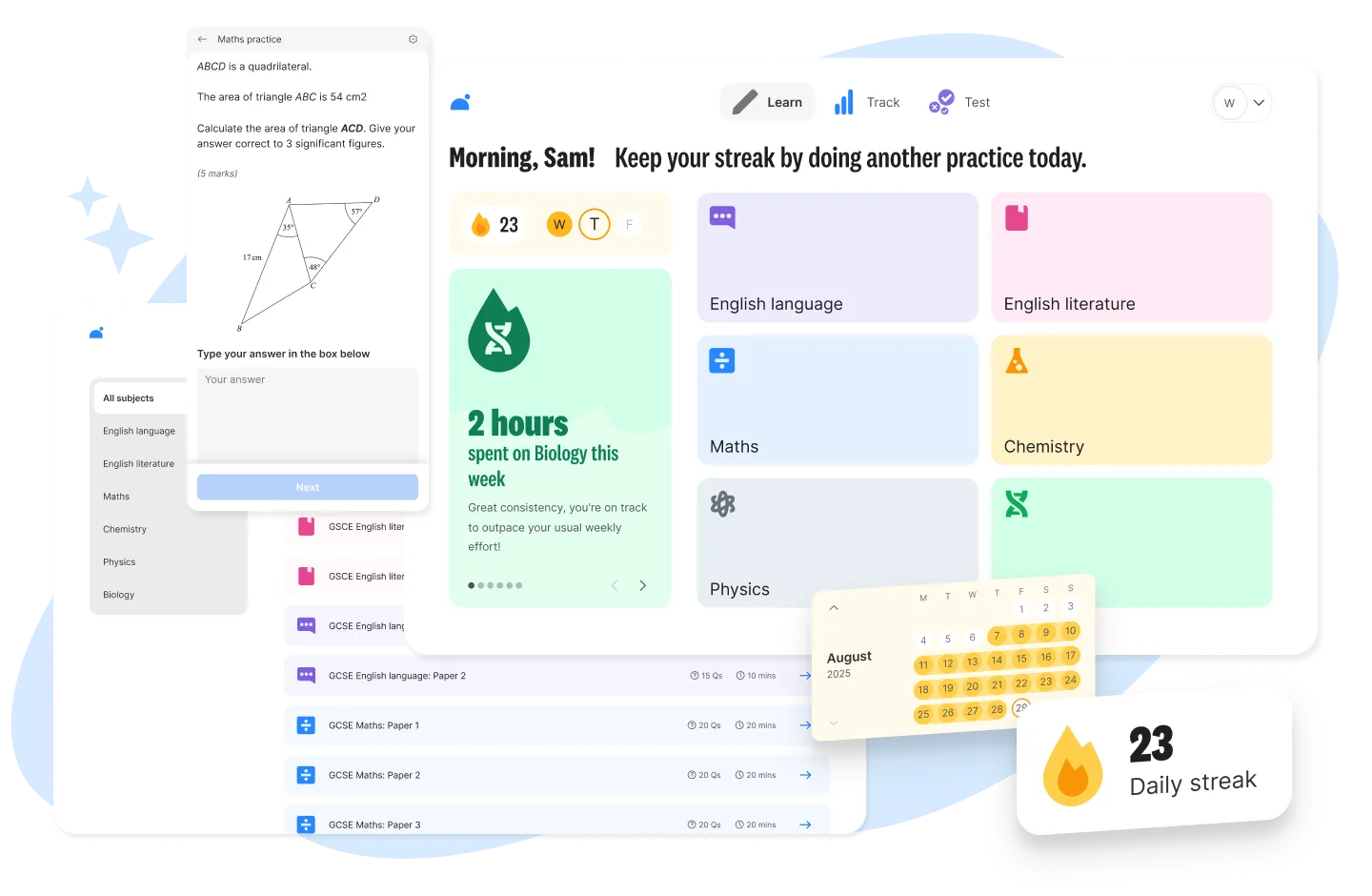
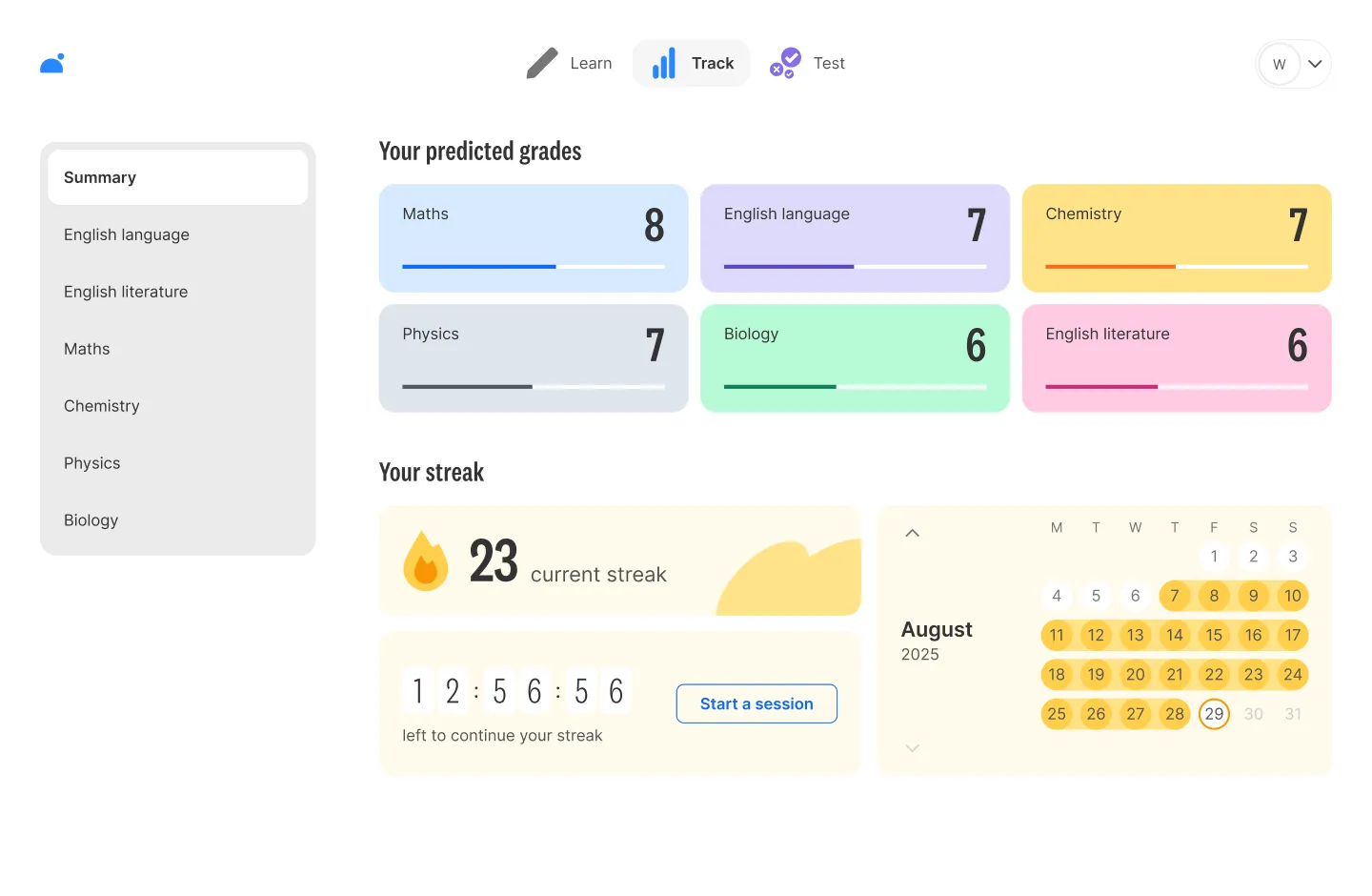
Atom's GCSE platform gives you the structure and feedback to make that happen. You get predicted papers matched to your exact exam board, guided courses covering your full curriculum, and instant, examiner-style feedback after every question that tells you exactly where you gained marks and what to include next time. Your progress is tracked across every topic, so you always know where to focus and how close you are to your goal.
Atom tells you what to revise, shows you how to improve, and keeps you moving forward. Create your free account today.