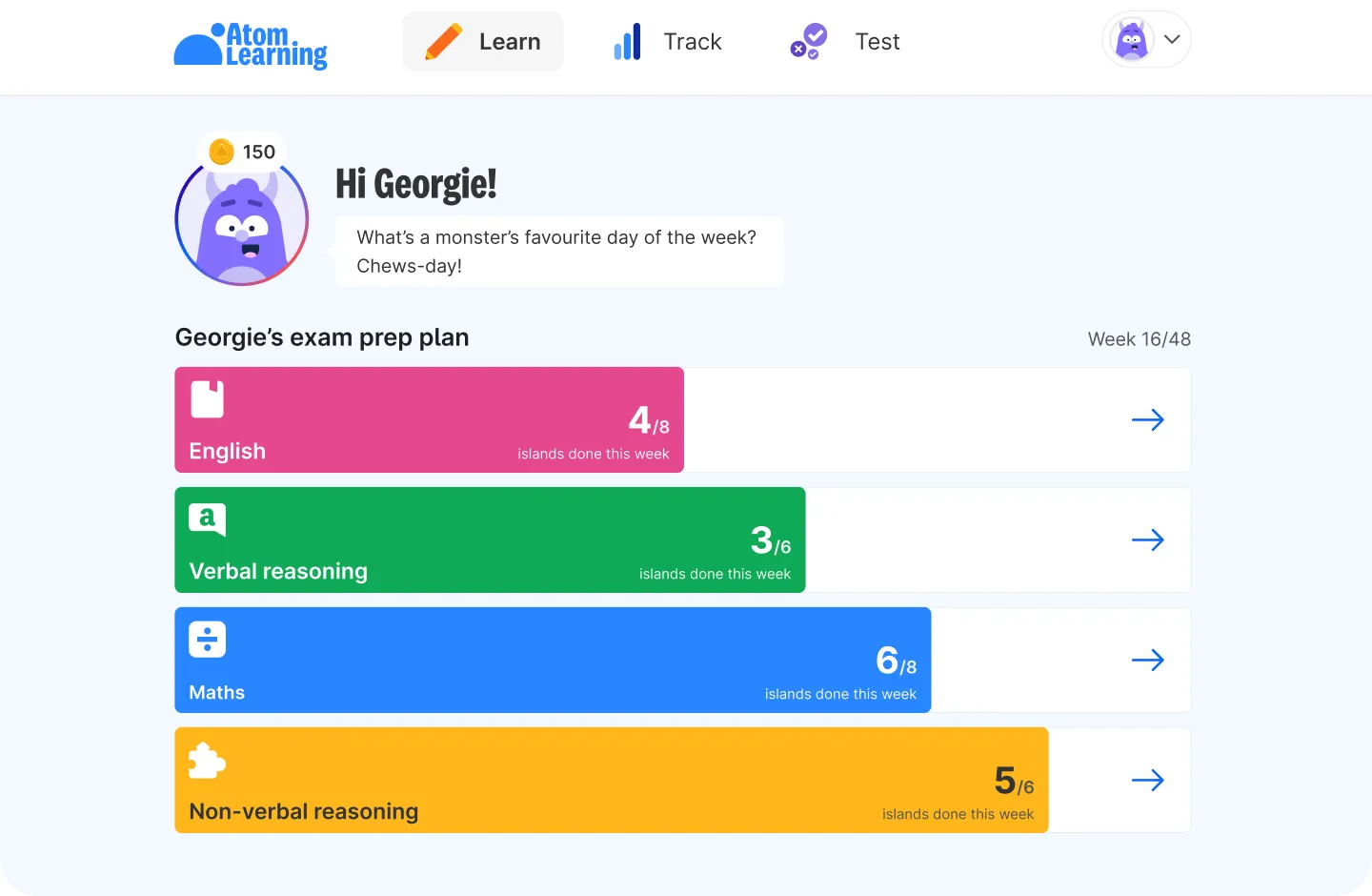

When to start 11+ preparation: Year 3, 4, 5 and 6 guide

Something shifts - usually around Year 3 or Year 4 - when you overhear another parent mention that their child has already started preparing. Or your child comes home from a playdate and mentions their friend is doing "practice papers." Or you attend a school information evening and the word "grammar" is mentioned, and suddenly the exam that felt comfortably distant feels alarmingly close.
The question that arrives, usually at about 11pm: have we already left it too late?
The honest answer: almost certainly no. Here is the complete guide to timing, year by year.
Why everyone seems to have started earlier than you
The 11+ preparation world has a visibility problem. The parents you hear about most are those who started in Year 1, tutor twice a week, and attend every mock exam. Online forums tend to reinforce this, giving a badly skewed picture of what a normal family's preparation looks like.
The reality is that most families prepare consistently at home, starting at a sensible time and building steadily toward the exam. What matters far more than when you start is how you use the time you have. Below is a year-by-year guide to what that looks like in practice and what's actually worth doing at each stage.
11+ preparation in Year 3 — The Long Runway
You are ahead of where you need to be, and you have more time than almost any family preparing for the 11+. The longest runway builds the strongest foundation.
At this stage, the most valuable preparation is not 11+ practice papers, it is building the foundations that make later prep easier: wide reading, secure times tables, and a positive relationship with learning. A short daily reading habit and regular mental maths is worth more than any practice paper at this age.
Formal 11+ practice at age six or seven risks creating fatigue long before it's needed. Every concept your child masters now makes the next one easier: the goal is to build, not to rush!
What to do in Year 3: 10 minutes of reading daily. Word games and puzzles. 16 minutes on Atom.
11+ preparation in Year 4 — The Building Year
Year 4 is the natural starting point for structured preparation.
Two years of daily practice builds something cramming never can. At this stage, the focus shouldn't be intensity, it's about building the daily habit and introducing your child to the types of questions the 11+ involves, particularly verbal reasoning (VR) and non-verbal reasoning (NVR). These subjects are almost never taught in primary schools, and early familiarity with what they look like is a genuine advantage.
Not sure if VR and NVR feature in your local 11+? Find out here.
Ten to fifteen minutes, three or four times a week, is entirely sufficient. The goal is habit and familiarity, not mastery.
A parent on our National Offer Day survey described exactly this approach:
"We started Atom in Year 4 just to build a habit. By the time Year 5 came around, the routine was already there and she found it easy to scale up. Looking back, starting early and keeping it low-pressure was the best thing we did."
What to do in Year 4:
- Introduce VR and NVR gently — aim for familiarity with question formats.
- Keep sessions short (10–16 minutes).
- Build the habit of daily practice. Know which exam board your target school uses — GL, CEM, Quest or school-specific — as format varies significantly. See our guide to the different exam boards.
11+ preparation in Year 5 — The Decisive Year
Year 5 is the peak preparation window and the point where what you do matters more than how much you do.
This is the year to shift from familiarity building to systematic preparation. The families who get the best 11+ results in Year 5 aren't the busiest. They're the most consistent.
What consistent Year 5 preparation looks like: 16 minutes a day is 100 hours of practice a year. At that pace, a child who starts in September of Year 5 will have covered the full 11+ curriculum by the following summer, with lots of time for timed practice and mock exams before the real thing.
The key is not volume; it's targeting. The question is not how much your child is practising — it's whether what they're practising is filling the right gaps.
How to structure Year 5 preparation:
Months 1–5 (September–January):
- Systematic topic coverage across all subjects
- Prioritise VR and NVR first if these are included in your exam as these are least familiar from school
- 16 minutes daily, every concept tracked, every gap found and addressed before it builds
Months 6–9 (February–May):
- Begin introducing timed practice sections alongside topic work
- Roughly 60% skill-building, 40% timed practice
- By May, your child should be comfortable working under time pressure
Months 10–12 (June–August):
- Timed papers and mock exam conditions
- Targeted revision of persistent weak areas
- One or two mock exams on Atom per week
What to do in Year 5:
- Start or continue a daily 16-minute routine
- Know your exam board and prepare specifically for its format
- Track progress by topic. Begin timed practice by February at the latest.
Parents who used Atom's structured, topic-by-topic approach through Year 5 describe exactly the kind of progress this builds. Atom identifies where your child needs the most work and sequences practice around that:
"Every weekend it highlights my son's weak areas and the next week it makes lessons on those topics and my son practises those topics until he masters them. At the end, in maths he was 100% master in all topics." - Parent, Wilmington Grammar School for Boys
11+ preparation in Year 6 — The Final Stretch
Exams are coming. What matters now is making every session count.
What Year 6 preparation should focus on: finding the gaps most likely to cost marks and closing them. This isn't about doing more of everything, it's about doing the right things, in the right order, in the time available.
Every session should be targeted at something specific, and no time should be spent on concepts your child has already mastered.
"We only had 8 weeks to prepare for the test as a last minute decision. We did Atom every night almost and my daughter passed two schools."
"We used Atom for 3 months prior to the 11+ test with my son securing a place today."
No guilt about what wasn't done before. Starting today is the most valuable choice available. For families joining very close to the exam, see our guide to starting late.
What to do in Year 6:
- Start a diagnostic assessment immediately to find specific gaps
- Prioritise VR/NVR and any maths topics not yet covered
- Integrate timed practice and mock tests quickly
A word on starting too early
The anxiety around 11+ preparation almost always runs in one direction: the fear of starting too late. It's worth knowing that the opposite risk exists too. Very early, very intensive preparation, such as formal practice papers in Year 2 or Year 3, can produce burnout long before it's needed. Children who prepare at that intensity sometimes arrive at Year 6 worn out rather than ready.
Consistency beats intensity every time. A child who does 16 minutes daily for twelve months will almost always outperform a child who did three-hour Sunday sessions for two years. This isn't just intuition — it's backed by research. Distributed practice, spreading learning out over time rather than cramming it into blocks, produces significantly better retention.
Start at the right level for the year your child is in, and don't let anxiety pull preparation earlier than it needs to be.
Sixteen minutes a day. That's all it takes.

A short daily session on Atom does more than you'd expect. It builds a habit. It builds confidence. Day by day, it builds a child who sits down to learn without being asked, because they actually enjoy it.
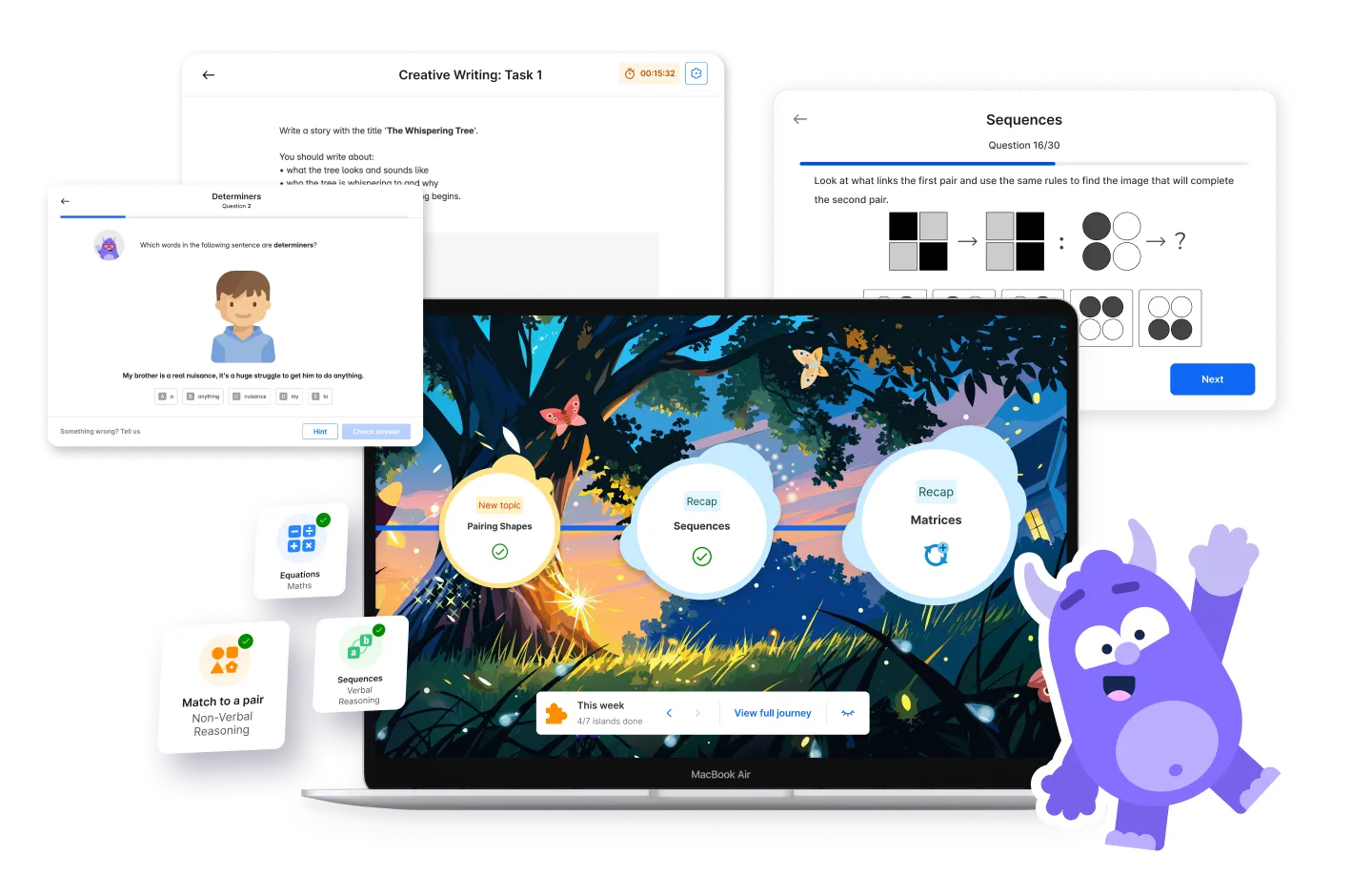
Atom adapts to your child's level, so they're always practising the right things. Not too easy, not too hard. Just right.
- Follow personalised daily practice plans that adapt to your child's level automatically
- Build real understanding across maths, English and reasoning in just 16 minutes a day
- Watch confidence grow as your child sees their own progress, concept by concept
Start your free trial and help your child build the habits that make learning stick