Considering Wycombe Abbey for your child? We’ve collated everything you need to know about 11+ entry. Learn how to apply, what’s on the entrance exam, and how to help your child prepare for success.
Key information for Wycombe Abbey
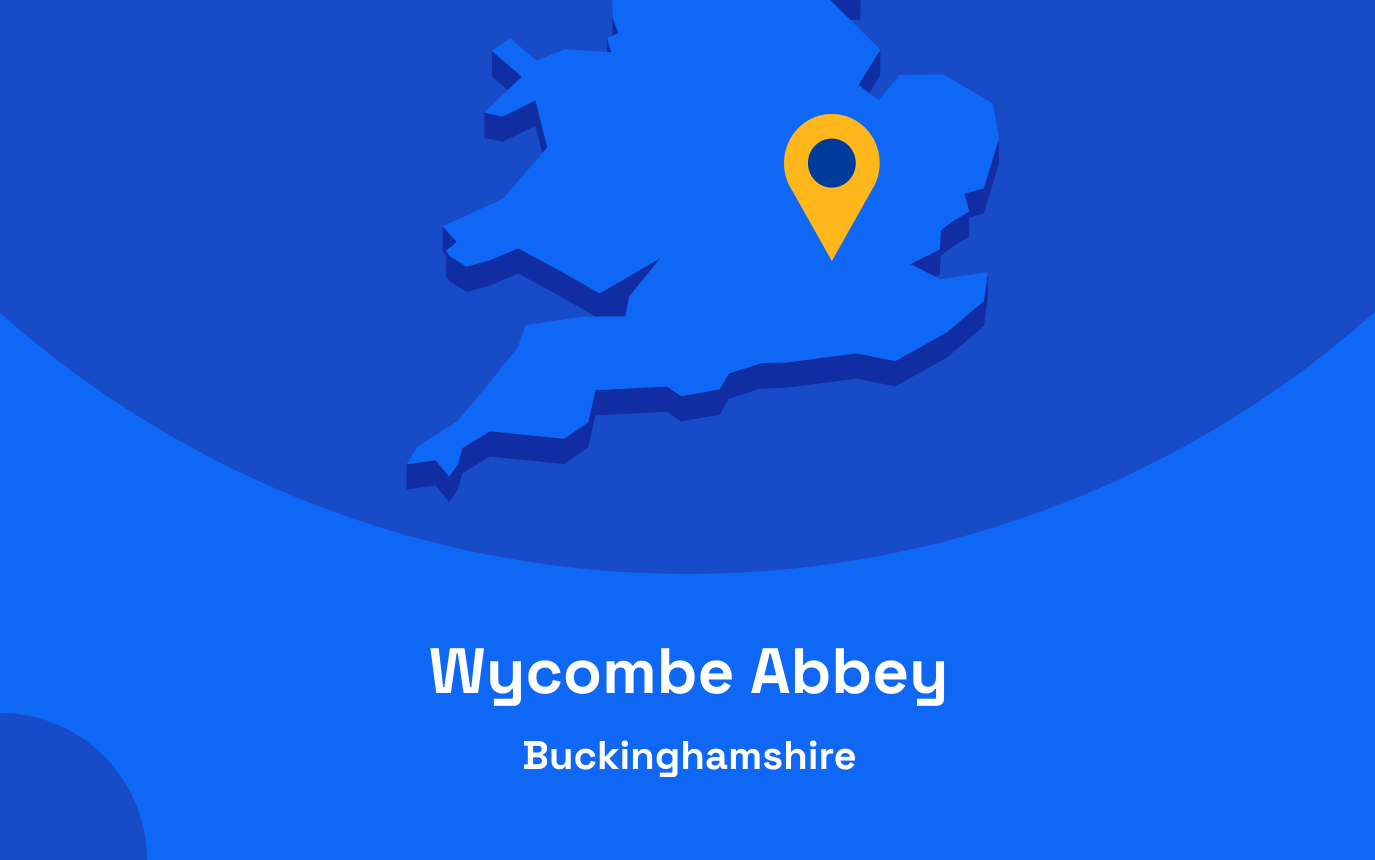
Address: Wycombe Abbey, High Wycombe, Buckinghamshire, HP11 1PE
11+ open days: autumn and spring terms. Regular coffee mornings are held throughout the year
11+ selection criteria:ISEB Common Pre-Test, written assessments, interview and group activities
Financial assistance: means-tested bursaries
11+ scholarships: academic and music
About Wycombe Abbey
Wycombe Abbey is a private girls' boarding school in High Wycombe, Buckinghamshire. It was founded in 1896 by Dame Frances Dove – a Victorian trailblazer who promoted equal opportunities for girls.
The school is a global leader in girls’ boarding education. Students live on a leafy 170-acre campus which includes a lake, woods, gardens and several listed buildings. Girls have the space to thrive and plenty of opportunities to develop independence. The extracurricular programme is vast and includes activities such as ballet, street dance, music and over 20 sports.
A supportive yet challenging learning environment encourages students to develop intellectual curiosity. Timetabled lessons include several languages, cookery and wellbeing. Every year, students leave for top global universities including Oxbridge, the Russell Group and the Ivy League.
Dates for your diary
Registration closes: 1st June in Year 5
Entrance exams: November in Year 6
Offers of places: December in Year 6
Scholarship exam (by invitation): February in Year 6
Acceptance deadline: March in Year 6
Wycombe Abbey 11+ entrance exam
There are three stages to the assessment process at Wycombe Abbey for 11 plus entry.
Stage 1: ISEB Common Pre-Test
All children applying for 11+ entry to Wycombe Abbey sit the ISEB Common Pre-Test. This is an exam created by the Independent Schools Examination Board which is usually taken in the autumn term of Year 6. Girls applying to Wycombe Abbey need to take the test by November in Year 6.
The ISEB Common Pre-Test is taken online and consists of multiple choice questions. It is entirely adaptive, which means the questions become more difficult depending on how your child is performing. The questions span four subjects:
Maths: questions are based on the Year 5 national curriculum – although children in Year 6 may find this section challenging. The questions range from arithmetic to multi-step problem solving.
English: questions are split into two sections: reading comprehension, and spelling, punctuation and grammar.
Verbal reasoning: your child will be tested on their ability to reason and solve problems with written information, such as letters, words, symbols and numbers.
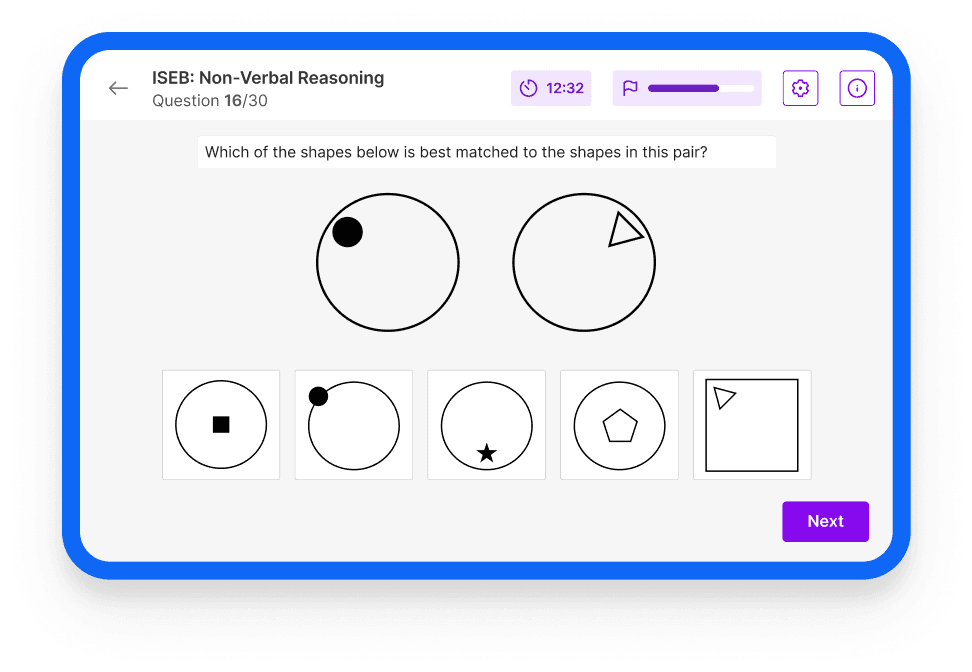
Non-verbal reasoning: these questions assess your child’s logic, critical thinking and problem-solving skills using figures and diagrams. They will need to show that they can analyse and manipulate 2D and 3D figures.
The ISEB Common Pre-Test takes around 2 and a half hours to complete. Your child can sit the four subjects together or at separate times. If they are taking all four subjects on the same day, they will be allowed a short break between each section.
Stage 2: assessment day
The second stage of the assessment process for Wycombe Abbey is an assessment day. This takes place at the school in November in Year 6.
Your child will have an interview with a member of staff and will take part in small group activities. She will also sit written exams:
English (1 hour)
Maths (1 hour)
A reference from your daughter's current school will be requested.
Stage 3: scholarship exams
The admissions team at Wycombe Abbey will make firm offers of places in December in Year 6 on the basis of:
performance in the ISEB Common Pre-Test and written English and maths exams
performance in the interview and small group activities
supporting reference from your child’s current school
Children who receive a firm offer of a place will be invited to take the Wycombe Abbey scholarship exams in the spring term. This consists of papers in English, maths, science, humanities, and a language aptitude test. Academic scholars are chosen on the basis of performance in these tests.
No items found.
Atom’s top tips for applying to Wycombe Abbey
Wycombe Abbey is a very popular selective school, so competition for places can be high. Here are our top tips to help your child prepare for the selection process.
Bitesize learning
It’s important to build a good knowledge base before school entrance exams. Your child should have a good understanding of the content they’ve been taught at school before testing their knowledge with practice tests.
Using a ‘little and often’ approach when learning is key – our brains encode new information more effectively when dealing with smaller ‘chunks’ of information. For children aged 10–11, child psychologists recommend regular study sessions of 20–30 minutes.
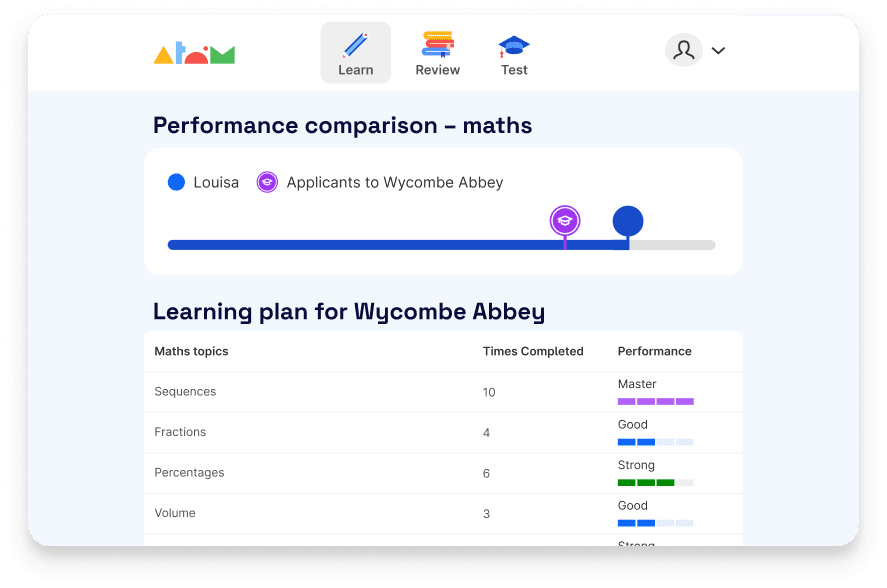
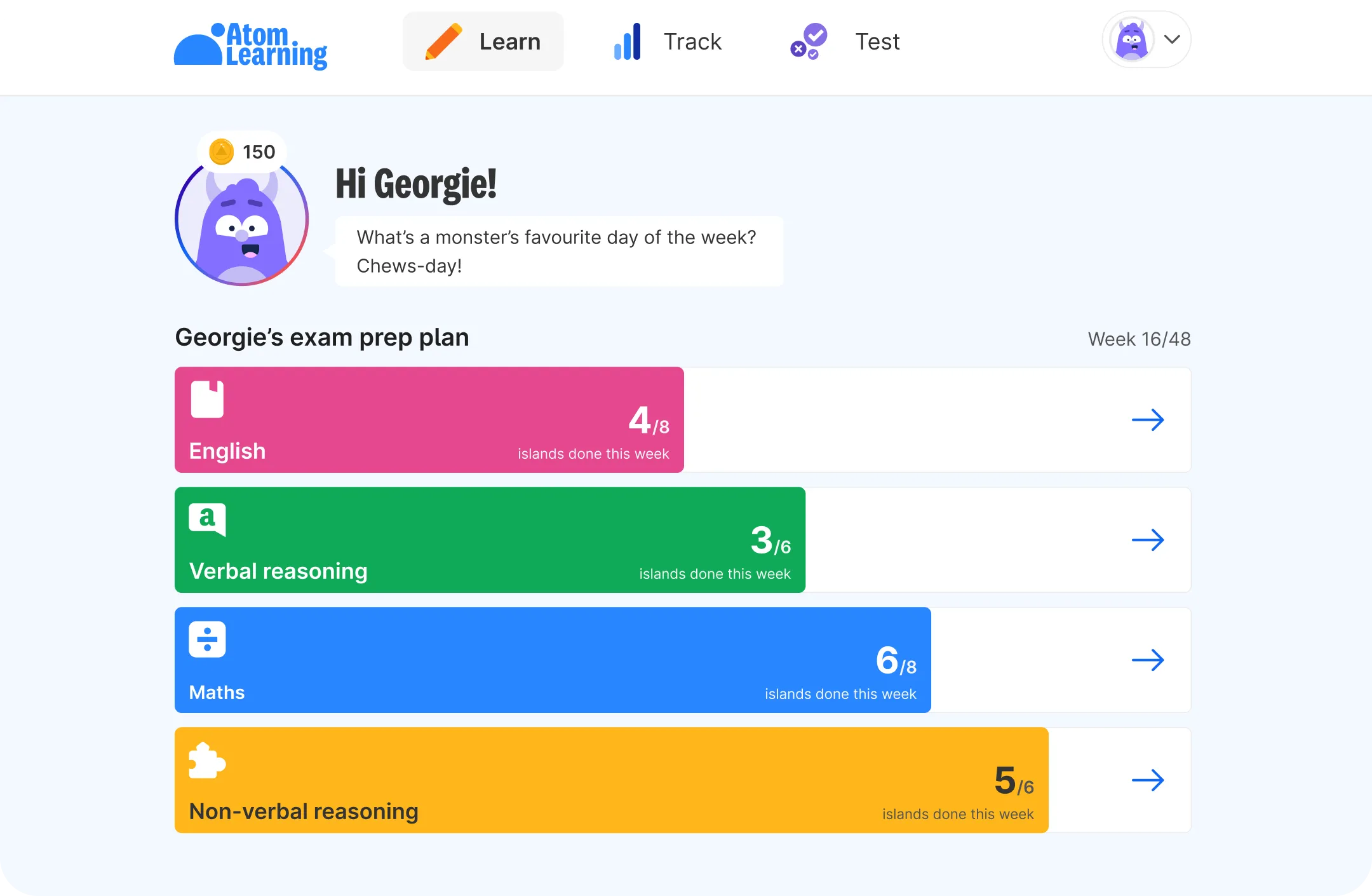
With Atom Home, you don’t need to worry about creating a study schedule. When you enter your target schools, you’ll get a bespoke learning plan tailored to your schools’ entrance exams. Know exactly what your child needs to do each week to confidently pass.
Read widely
Entrance exams test children’s ability to analyse and interpret written information. Regular reading is a great way to help your child build these skills.
Encourage them to read books from different genres and by a diverse range of authors. Increasing the variety of your child’s reading will help them understand different styles, tones and purposes. Meanwhile, reading a little every day will help widen their vocabulary, sharpen their analytical thinking, and enhance their imagination.
Selective schools are often looking for children who are interested in learning. You can help by supporting your child’s broader learning, their intellectual curiosity, and their passion for developing an understanding of the world.
Talk to your child about the world we live in and inspire an interest in current affairs with age-appropriate journalism. It’s also a good idea to make sure they’re benefitting from a rich variety of experiences, such as visiting libraries, museums and galleries.
Refine exam technique
When your child feels confident with their knowledge of the exam topics, they’ll be ready to put their knowledge to the test.
Mock tests can help your child develop problem-solving skills and refine exam technique. They’re also a great way to consolidate learning, while highlighting any knowledge gaps they might want to tackle before exam day.
When you set Wycombe Abbey as a target school on Atom Home, your child will get ISEB mock tests as part of their learning plan. Atom’s mock tests mirror the real ISEB – the curriculum, the timings, the controls and even the colours. Know what to expect on exam day.
Celebrate progress
Setting regular, achievable goals and celebrating your child’s progress – no matter how big or small – will help keep their motivation high.
Make sure to encourage a growth mindset. This means celebrating effort, as well as achievement! When your child makes mistakes or struggles to understand a particular topic, help them understand that they’ll improve through practice. Regular praise will help your child improve their resilience when tackling new and challenging topics.
No items found.
No items found.
Remove the guesswork from ISEB prep.
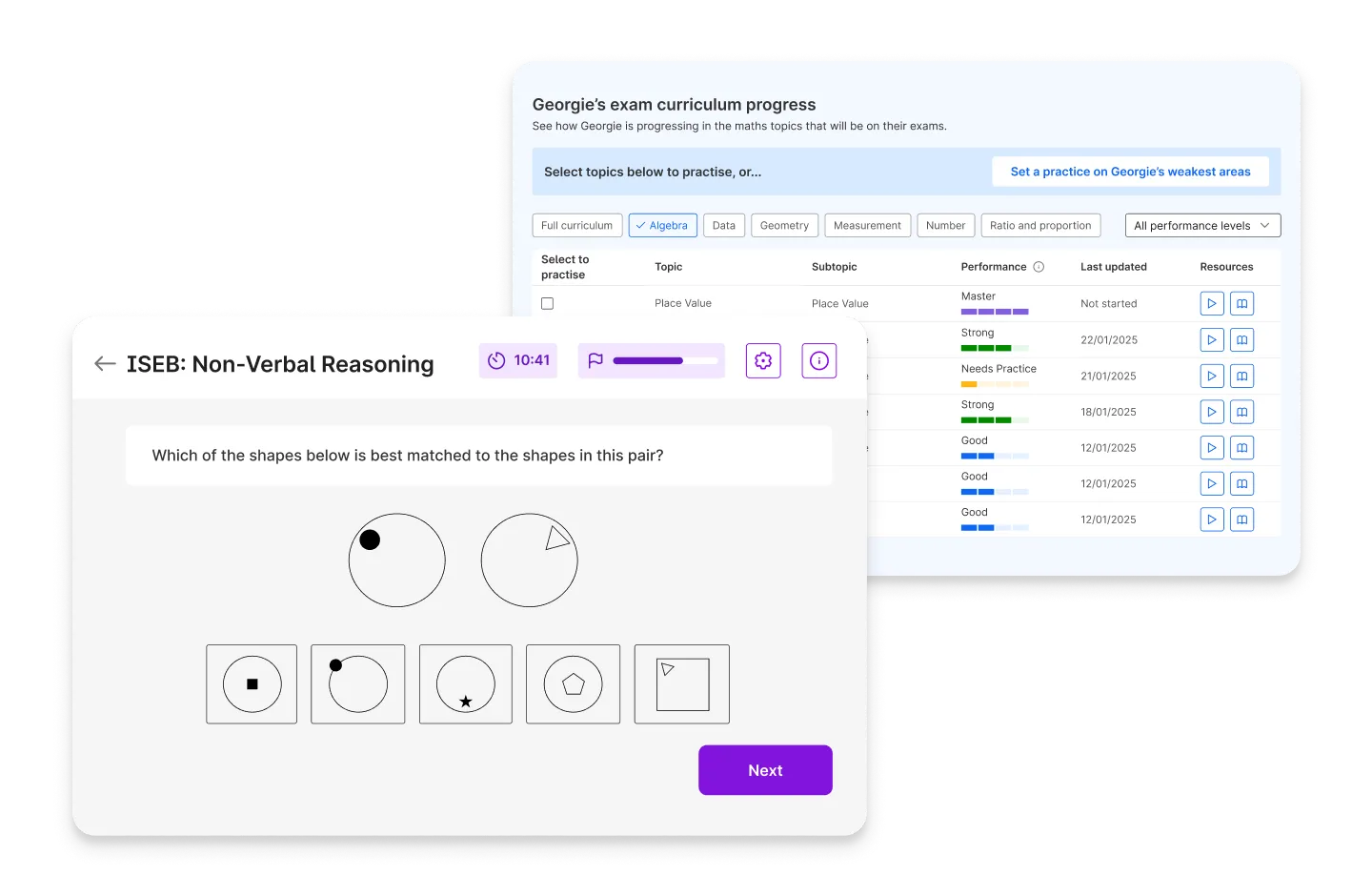
Worried about how your child will perform in the ISEB Common Pre-Test? The adaptive format can feel unpredictable, but their preparation doesn’t have to.
Atom adapts to your child’s level as they work. We show you exactly what they need to practise and how they’re progressing.