Back to blog

What do children study in Year 8? Subjects and how to help

By
Atom
|
November 17, 2026

In Year 8, most children study English, maths, science, history, geography, a modern language, design and technology, art and design, music, PE, citizenship and computing, plus religious education. This guide lists what the national curriculum says, explains what tends to change between Year 7 and Year 8, and shows how you can help with organisation and tricky subjects without having to teach the content yourself.

Key takeaways

  • The national curriculum names the same set of subjects across Key Stage 3, and schools decide how to arrange them.
  • Year 8 can feel different from Year 7 because the work is newer and more is expected from students.
  • A planner, a routine and one weekly check-in make homework more manageable.
  • You can support a hard subject by asking questions, not by teaching it.
  • GCSE options usually come later, and schools set their own timing.

What do children study in Year 8?

The national curriculum for England lists twelve compulsory subjects at Key Stage 3, which covers Years 7, 8 and 9. GOV.UK lists them as:

  • English
  • Maths
  • Science
  • History
  • Geography
  • Modern languages, such as French or Spanish, depending on the school
  • Design and technology
  • Art and design
  • Music
  • Physical education (PE)
  • Citizenship
  • Computing

Schools must also provide religious education (RE) and relationships, health and sex education. Parents can choose to take their child out of sex education or RE.

Schools differ, and this does matter. The national curriculum applies to local-authority-maintained schools. Academies and private schools do not have to follow it, although academies must teach a broad and balanced curriculum that includes English, maths and science.

The curriculum also sets out what is taught across Key Stage 3, not year by year. That means each school decides what goes into Year 8. Your child's school can tell you what their Year 8 looks like, so check the school website or ask their form tutor.

For the topics inside each subject, our Key Stage 3 explained guide goes into detail, and what Year 8 maths covers looks at maths specifically.

What changes between Year 7 and Year 8?

Between Year 7 and Year 8, the work often becomes newer, the homework more regular and the expectation of independence higher. The exact changes depend on the school.

  • The content may feel new. Ofsted's 2015 review of Key Stage 3, "Key Stage 3: the wasted years?", found that some pupils were repeating work from primary school in Year 7. By Year 8 there can be less revision of old ground.
  • The timetable can change. A different set of subjects, groups or teachers may appear, so ask your child's school.
  • More is expected without being asked. Children are expected to keep track of deadlines across several teachers.
  • Explanations may feel less clear. A survey of 157,468 secondary pupils by Edurio in 2024/25 found that 60% of Year 7 pupils say their teachers explain work clearly, compared with 45% in Year 8. That is an average across many pupils, so it can’t tell you what your child is experiencing.

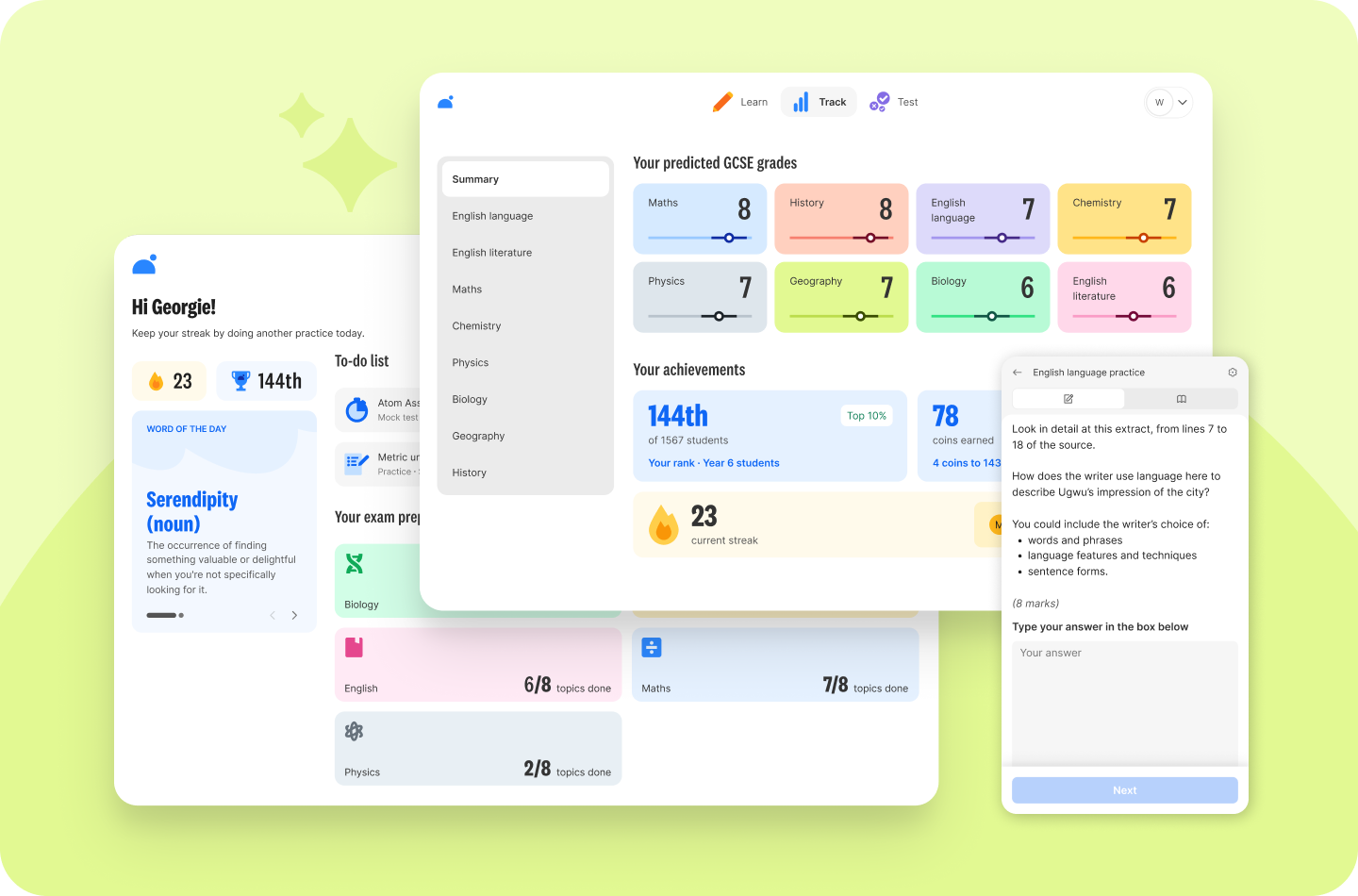
Atom for Years 7-9 is coming this November.

Built to keep your child on track for top sets and GCSE success. Join the waitlist for early access.

Join the waitlist

Why do new subjects feel hard?

New subjects can feel hard because each one has its own words, habits and expectations, and there is often no recap before the next step. Here are a few examples:

  • Science brings new vocabulary, and a missed word can make a whole topic confusing.
  • Languages build step by step, so a gap from one lesson shows up in the next.
  • History and geography ask "why" and "how do you know", not just "what happened".
  • Subjects with a practical element, such as design and technology or art, ask students to plan and make choices for themselves.

None of this means your child is struggling. It does mean the first few weeks of a new topic can feel bumpy, even for a child who finds school easy.

How can you help with organisation and homework?

Help your child build a system, then let them run it. You do not need to know the subject to help with organisation.

Four things that often help:

  1. A timetable where they can see it. Put a copy on the fridge or inside their bedroom door, so "what do I need tomorrow?" has a quick answer.
  2. A planner they actually use. For example, write each task down as soon as it is set, with the due date.
  3. Bag packed the night before. Five minutes at 8pm saves a panic at 8am.
  4. A Sunday check-in. Sit together for five minutes and ask "what's due this week, and which one will take longest?"

Top tip: Keep the check-in short and the same every week. It builds a habit, and your child does the talking.

Our guides on how much homework Year 7 should get and building an effective study routine have more ideas, and they apply well to Year 8.

How can you support a subject your child finds difficult?

You can support a hard subject by asking questions and building small habits, not by teaching it yourself. Here are four ways to do it.

  • Ask them to teach you. "Explain photosynthesis to me as if I'd never heard of it" shows what they know and what is missing. You do not need to know the answer.
  • Break it down. Instead of "I'm bad at French", find the specific thing, such as verb endings, and work on that for ten minutes at a time.
  • Ask the teacher one question. For example: "Is there one topic in geography you'd suggest we go over at home?"
  • Try another format. If a textbook is not working, a short video, a quiz or a diagram might.

A word list on the fridge can help in science and languages. Ask your child to add new words as they meet them, and glance at it together once or twice a week.

If one subject keeps being a struggle, a tutor or an online programme can be an option. It is worth asking the teacher first, so that extra help matches what is taught in class.

When do GCSE options come into view?

When GCSE options are discussed is set by each school, so ask when yours is. Some of the choices are already made for you. At GCSE, English, maths and science are compulsory, and schools must offer at least one subject from each of four areas: arts, design and technology, humanities and modern languages.

There are no national tests in Years 7 to 9, and GCSE courses belong to Key Stage 4 (Years 10 and 11). Year 8 is not the place to decide anything final.

The same Ofsted review recommended that schools give careers guidance from Year 8 onwards. It found that 45% of Year 8 pupils in its survey said they had received no careers guidance or not enough. That was in 2015, but it shows why a casual chat can help: ask which subjects your child enjoys now and what they might like to find out more about. Our guide to how to choose your GCSE subjects covers what comes next.
No items found.
No items found.
No items found.

Take control of the years that shape GCSE success.

Everything you need to support Years 7, 8 and 9, in one place.

Over 350,000+ families already trust Atom for 11+ and GCSE. Now we're bringing the same support to Years 7-9, the years that set the pace for everything after.

πŸ“„ Topic-by-topic practice across Maths, English, Biology, Chemistry and Physics, so you always know exactly what's covered

πŸŽ“ Guided learning that meets your child where they are, whether that's reaching top sets or building confidence in weaker subjects

✍️ Instant feedback on every question, including full written answers

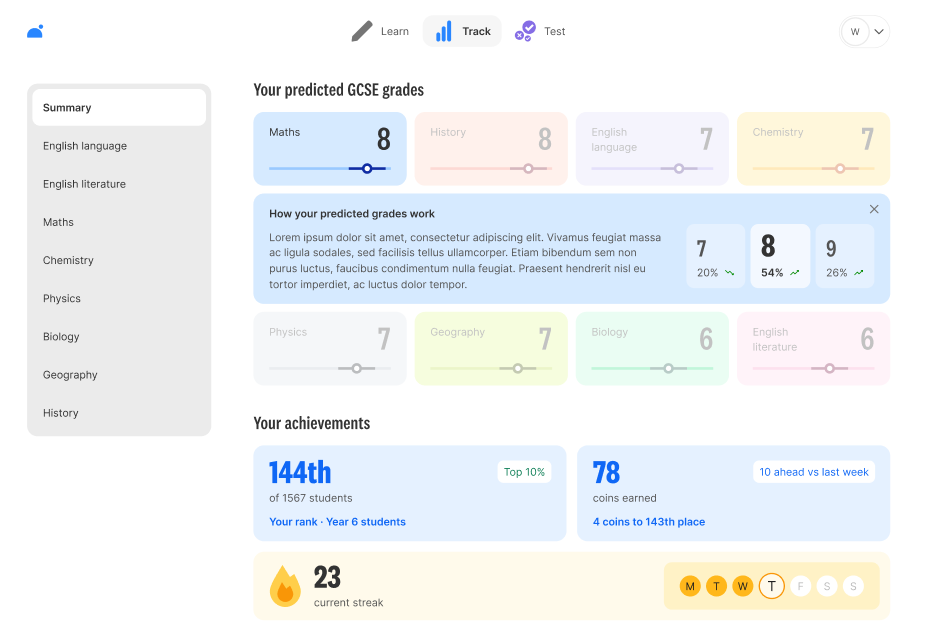
πŸ“Š Personalised weekly goals and topic-by-topic progress tracking

Be the first to know when Atom for Years 7-9 launches

Join the waitlist now for early access, ahead of the November launch.

Sign up now

Contents