
Verbal and non-verbal reasoning: everything Year 3 and 4 parents need to know
By Year 3 or 4, most parents have heard the words "verbal reasoning" and "non-verbal reasoning" in open evening presentations, 11+ conversations, or playground discussions.
Yet neither subject appears anywhere in the primary curriculum. That disconnect is confusing, and it's worth addressing directly.
If your child hasn't encountered reasoning before, that's completely normal. It isn't taught in school, and that is precisely why Years 3 and 4 are such a valuable time to introduce it.
This isn't about exam pressure. It's about building familiarity, and familiarity built steadily over time is what turns an unfamiliar subject into a confident one.
Reasoning isn't on the curriculum. Here's why that matters.
One of the main reasons reasoning unsettles parents and children alike is that it doesn't resemble normal English or maths lessons. That's intentional, and it's worth understanding why.
Verbal and non-verbal reasoning were originally developed as measures of cognitive ability: ways of assessing how a child thinks, rather than what they've been taught. The 11+ adopted them for exactly this reason. Grammar schools and selective independents use reasoning tests to identify potential, not just to reward curriculum preparation.
Neither subject appears in the national curriculum, which is precisely what makes them so important, and so unfamiliar. If your child is in Year 3 or 4, the chances are they haven't encountered either subject at all yet, and that's completely normal.
Even very able children can look at a reasoning question for the first time and feel completely lost, not because they aren't capable, but because they've never seen anything like it. That feeling is temporary. It isn't a measure of ability. It's a measure of exposure, and exposure is exactly what Years 3 and 4 are for.
What is verbal reasoning?
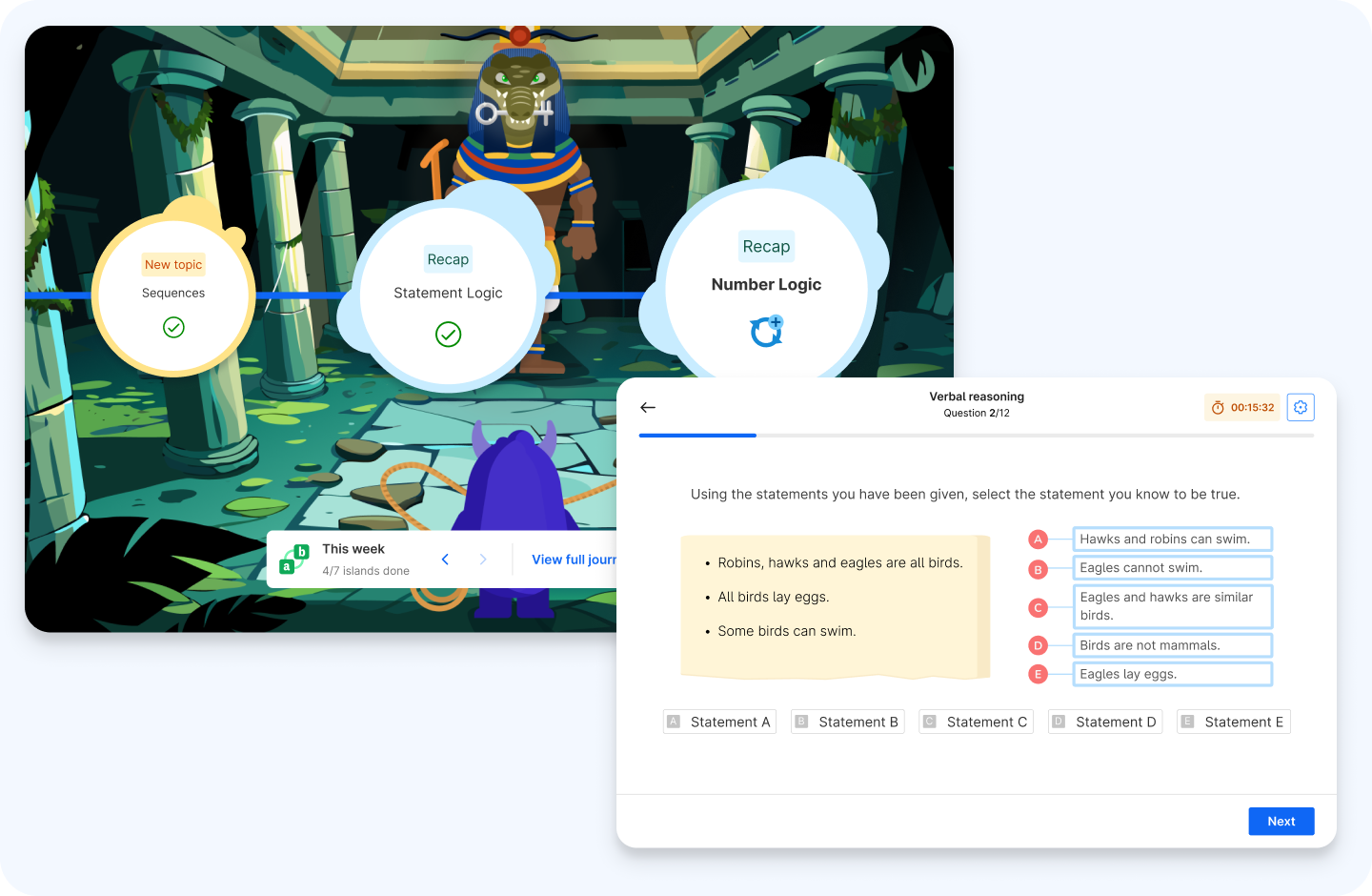
Verbal reasoning tests logical thinking through words and language. Rather than assessing reading or writing ability, it presents children with patterns, codes and sequences built from letters and words, and asks them to apply logic to solve them.
Children might be asked to:
- Identify relationships between words
- Spot patterns in letter sequences
- Decode simple word-based rules
- Apply logical deductions to short written statements
At first glance, some of these question types can seem unusual. Look more closely and they draw on skills children are already developing: vocabulary, attention to detail, pattern recognition and systematic thinking.
A child who reads widely and is curious about language has a strong foundation. What they need next is guided exposure to the specific formats used by reasoning questions.
In Years 3 and 4, the focus shouldn't be speed or exam technique. It should be about understanding how each type works. Once a child has seen a question type several times, it no longer feels cryptic. They begin to recognise the structure and approach it methodically. That sense of recognition is powerful. It turns "I don't understand this" into "I know how this works."
What is non-verbal reasoning?
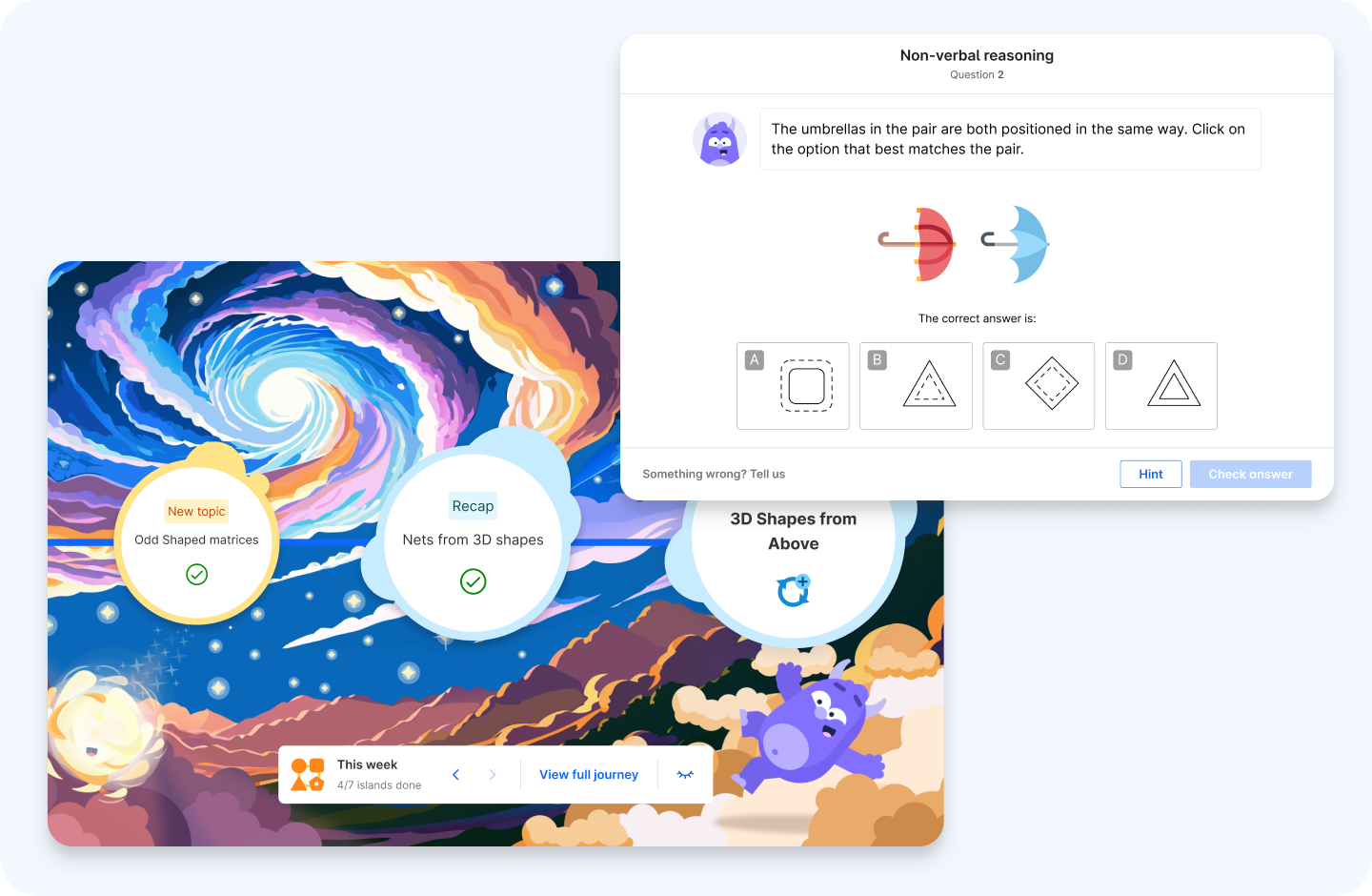
Non-verbal reasoning removes words altogether. Instead, it asks children to interpret shapes, patterns and visual rules.
They might work with:
- Sequences of shapes that change according to a pattern
- Matrix grids where rules run across rows and down columns
- Rotations and reflections
- Nets that fold into cubes
- Paper-folding visualisations
For some children, non-verbal reasoning feels almost like a puzzle book. For others, it initially feels abstract. The difference, again, is familiarity.
These question types aren't practised in primary school lessons, so when children first encounter them, they are decoding both the format and the rule simultaneously. With practice, the format becomes familiar and cognitive energy can be spent on solving the problem itself.
Everyday activities quietly support these skills: building with Lego, completing jigsaws, drawing symmetrical shapes, and playing spatial games. All of these strengthen the same mental processes non-verbal reasoning draws on. Structured practice makes that development more explicit and more consistent.
When should my child start learning reasoning?
If you're considering a grammar or independent school, verbal and non-verbal reasoning feature in most 11+ and selective entrance exams.
The sooner your child begins building familiarity with these question types, the better, not because there's urgency, but because time is the most valuable thing you have.
Reasoning isn't something children can cram. It develops through regular, calm exposure over time. The earlier that process starts, the more natural and confident it feels when exam preparation intensifies.
The families who arrive at Year 5 feeling prepared aren't the ones who did the most. They're the ones who started earliest and kept showing up. Starting in Year 3 or 4 gives that process the time it needs to work.
The question most parents reach at this point is a practical one: what does that actually look like day to day?
How Atom builds reasoning from the ground up
From your child's first session, Atom maps what they already understand and what they are ready to build next. Verbal and non-verbal reasoning are introduced gradually, one question type at a time, starting from first principles.
A personalised plan that introduces reasoning at the right pace
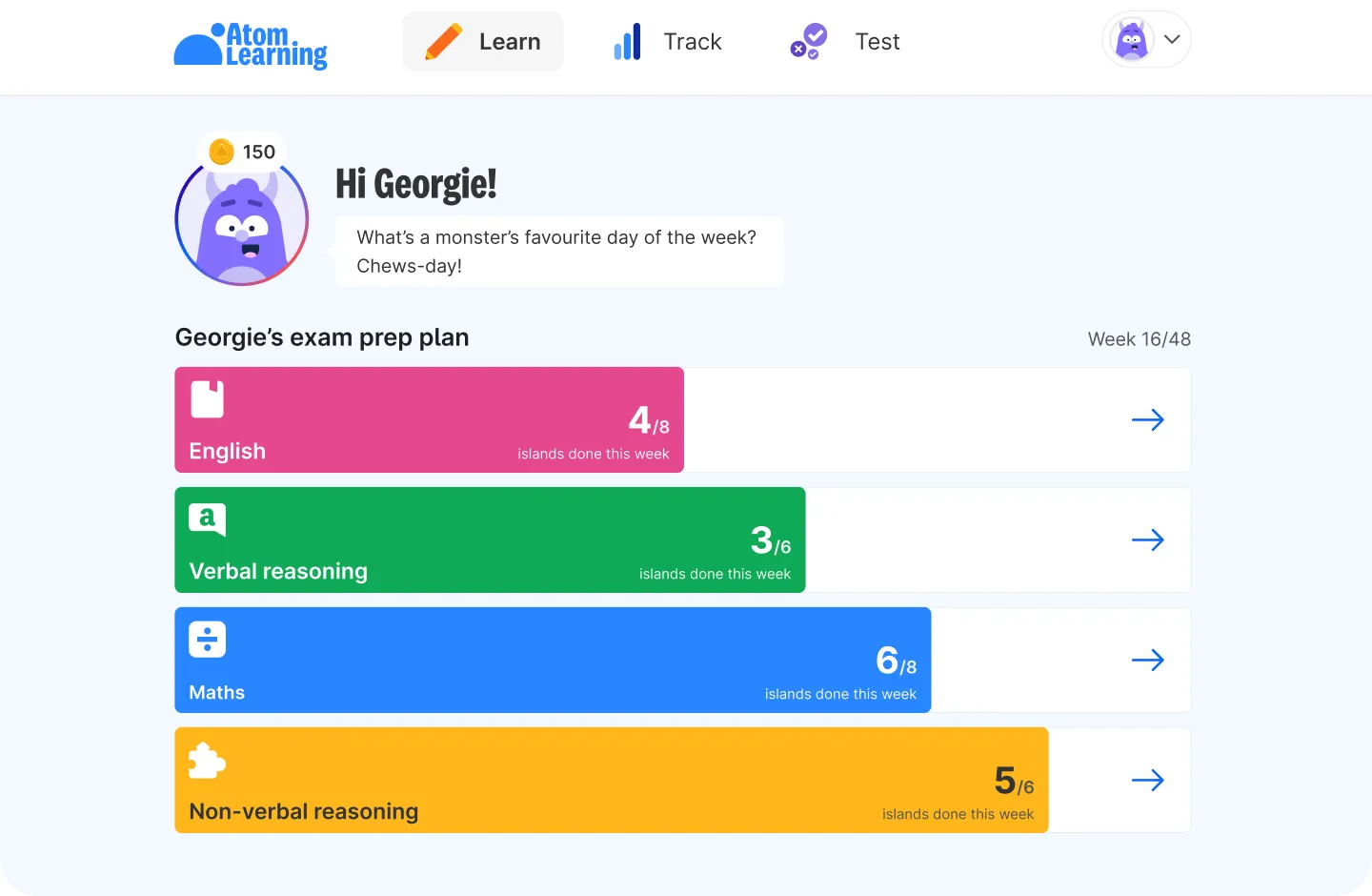
Atom builds your child a personalised exam prep plan from day one, structured around your target schools, your child's current level, and the time available before exam day. If reasoning features in your target school's entrance exam, Atom introduces it gradually and at the right pace.
Each question type builds on the last, and if something feels unfamiliar, the platform breaks it down before moving on. If a concept is secure, the challenge increases.
Learning islands: see exactly where your child is
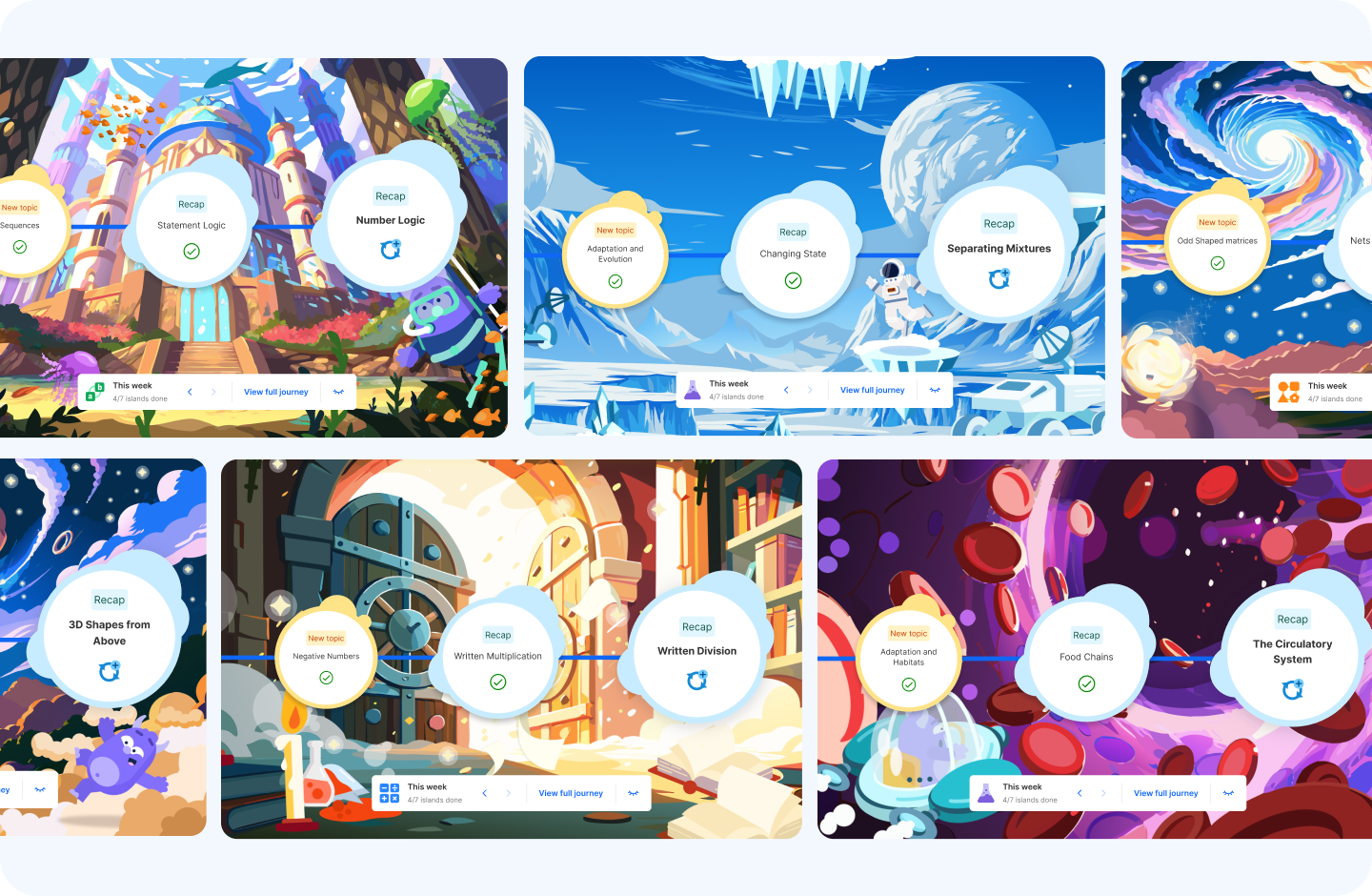
Atom's learning islands give you a concept-level map of your child's progress across every reasoning type. Not a general sense of how they're doing, but a clear picture of which question types are secure, which are developing, and what's coming next. For your child, the islands are something different entirely.
Each one is built around an engaging story and learning journey, making the process feel less like exam prep and more like an adventure. That visibility and engagement working together make it easy to see progress building, session by session.
Short sessions designed for consistency
Sessions are kept deliberately short, around 15 minutes, so developing reasoning skills becomes a manageable daily habit rather than something that only happens once a week.
Each session builds directly on the last, nothing is random and nothing is rushed. That consistency is what turns an unfamiliar subject into a confident one.
How to support reasoning at home without creating pressure
The goal in Years 3 and 4 is not performance. It is comfort. A few principles worth keeping in mind:
Keep sessions short and regular. Consistency matters more than duration. A steady rhythm across the year builds far more than occasional long sessions.
Treat early struggle as normal. Reasoning is unlike anything children encounter in the classroom, so the first few sessions will involve a lot of figuring out. That's the process working as it should. Children who push through that stage consistently find that it clicks far sooner than they expected.
Avoid timed work for now. Time pressure belongs in Year 5 and 6. In Years 3 and 4, understanding comes first. When children know how question types work, speed follows naturally.
Let everyday learning do some of the work. Reading supports verbal reasoning. Curiosity about words builds vocabulary. Spatial play supports non-verbal reasoning. At seven, eight or nine, the most effective preparation often feels like ordinary learning.
Ready to get started?
Reasoning confidence isn't something that arrives overnight. It builds session by session, question type by question type, over the months and years before an exam.
The families who get there are the ones who start early and stay consistent.
Atom gives you everything you need: a personalised plan built around your child, short sessions that fit into a normal week, and the visibility to see reasoning progress building in real time.
Sixteen minutes a day. That's all it takes.
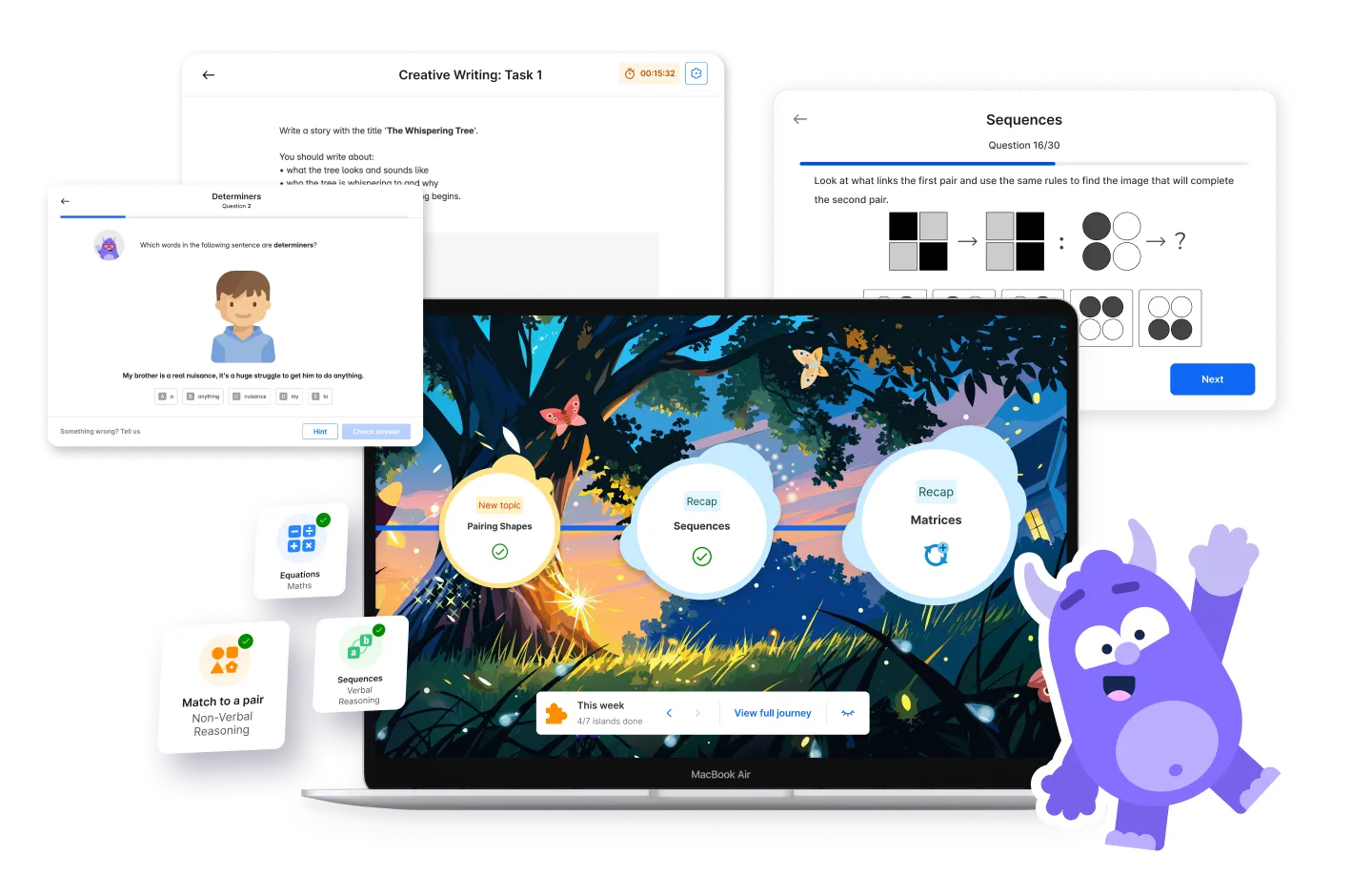
A short daily session on Atom does more than you'd expect. It builds a habit. It builds confidence. Day by day, it builds a child who sits down to learn without being asked, because they actually enjoy it.
Atom adapts to your child's level, so they're always practising the right things. Not too easy, not too hard. Just right.
- Follow personalised daily practice plans that adapt to your child's level automatically
- Build real understanding across maths, English and reasoning in just 16 minutes a day
- Watch confidence grow as your child sees their own progress, concept by concept
Start your free trial and help your child build the habits that make learning stick
Related posts