

How school appeals work: a step-by-step guide for parents

If your child wasn't offered a place at a school you applied for, you have a legal right to appeal, and it's worth understanding exactly what that involves before you decide whether to go ahead.
Here's exactly what that process involves, and what's worth knowing before you decide whether to go ahead.
In this guide:
- How the appeals process works, from submitting your case to the hearing itself
- What actually strengthens an appeal
- Your realistic chances of success, and what to do next if it doesn't succeed
What is a school admissions appeal?
An admissions appeal is your legal right to have an independent panel review a school's decision not to offer your child a place. The panel is separate from both the school and the local authority, and its members are trained specifically for this role, with no personal connection to the school in question. Their decision is legally binding, meaning the school must act on it.
You can appeal for any school named on your original application that refused your child a place; there is no charge for an appeal and you're not limited to one.
Should I accept my offered place before I appeal?
Yes, and it's worth doing straightaway. Accepting your offered place doesn't affect your right to appeal elsewhere, and there's no downside to holding both at once. We cover the reasoning behind this in more detail in our guide, Didn't get your first choice secondary school offer? Here's what to do next, including what happens if a waiting list place or a successful appeal comes through later.
What's the deadline, and how do I submit an appeal?
Your first step is to check your own school or local authority's appeals process, since both the deadline and how you submit vary from area to area.
You'll submit your appeal in writing, usually through an online form or portal, where you set out your own grounds for wanting the place. There's no limit on what you're allowed to raise; schools and local authorities can't restrict your grounds for appeal.
Here's how the timing typically plays out:
- Your deadline to submit: at least 20 school days from the date of your refusal letter. The exact date is set by the admission authority, usually the school or local authority, and published on their website by the end of February each year alongside their full appeals timetable, so that's the first place to check for accurate, up-to-date detail.
- Notice of your hearing: at least 10 school days once your appeal has been submitted.
- When your hearing actually happens: within 40 school days of the deadline, for applications made in the normal admissions round. In practice, that usually means a hearing sometime in May or June for families going through National Offer Day.
Each stage comes with its own guaranteed minimum notice period, so once you know your specific deadline, you can work backwards from there with a reasonable stretch of time to prepare your case.
What information do I need to include in my appeal?
The exact form varies by local authority and school; some use online portals, others a specific PDF, so the right approach is to focus on the content of your case rather than the format it sits in.
It's worth building your statement around three things:
- Your specific reason(s) for wanting this particular school, stated plainly rather than as a general preference. This could be a sibling already there, a genuine travel or logistical issue, a subject or pathway only this school offers, or a family or wellbeing circumstance.
- Why the school you were offered can't meet that need, if that's part of your case.
- Supporting evidence, wherever you have it. Depending on your reason, this might be a letter from a doctor or SENCO, but it could just as easily be something like proof of a sibling's enrolment, a letter from your child's current school, or evidence of a specific commute or safety concern.
Structuring your statement this way, rather than writing generally about the school's reputation, gives the panel exactly what it needs to weigh your case properly.
How do panels actually decide?
First, the panel checks whether the school followed its own admissions rules correctly, and whether taking on more children would cause any genuine harm to how it runs. If the rules weren't followed properly, or there's no real harm in taking more pupils, the appeal is upheld, and the process stops. This outcome is relatively rare, since schools usually do apply their own criteria correctly and can often show some genuine impact of admitting more children.
Secondly, if the rules were followed properly, and taking on more pupils would have an impact on how the school runs, the panel looks at whether your family's specific reasons for wanting this school outweigh that impact. If they do, your appeal is upheld.
What happens at the appeal hearing?
Hearings can be held in person, by video, by phone, or a mix, depending on what the admission authority arranges. Whichever format yours takes, you'll be given advance notice of how it will run, so there shouldn't be any surprises on the day.
The hearing is private, and it follows a set order: the school presents its case, you can question it, then you present your case, and the school can question you, with both sides summing up at the end. This structure exists to make sure both sides get a fair, equal chance to be heard.
You don't have to go through it alone. You can bring someone with you, a friend, family member, or a professional, to represent you or simply offer support. If you genuinely can't attend, you can ask for the appeal to be decided on written evidence alone.
The panel is made up of at least three trained people, all independent of the school, there specifically to weigh your case fairly. A clerk manages the process to keep things running smoothly, but doesn't vote on the outcome.
When and how will I get the decision?
You should receive a written decision within five school days of the hearing wherever possible. The decision is binding on the school, and the letter must explain the panel's reasoning clearly enough that you understand exactly why they decided as they did.
What are my realistic chances of success?
The most recent official figures, for 2025, show that 19.9% of secondary school appeals that were heard were successful, a slight decline from 20.7% the year before.
That's roughly one in five nationally, though the number that actually matters is the one for your specific school, which can look very different: some voluntary-aided and foundation schools see notably higher success rates, some heavily oversubscribed academies see lower ones, and there's real variation by region too.
Ask your local authority or the school directly for their appeal statistics from previous years; it's a far more useful number to work from than the national average.
What if my appeal isn't successful?
An unsuccessful appeal isn't the end of the road; there are still a few paths open to you.
You generally don't have the right to a second appeal for the same school in the same academic year. The exception is if something significant genuinely changes in your circumstance; a house move into catchment or a new diagnosis, for example, and the admission authority agrees to consider a fresh application.
An appeal panel's decision can only be overturned through a court process called judicial review, which is rare and reserved for cases where the process itself was seriously flawed, not simply because you disagree with the outcome. That said, if you think the appeal itself was handled unfairly, for example, if the correct process wasn't followed, you can complain. If the complaint is upheld, you get a new hearing with a different panel, giving your case a genuine second chance.
Your other options stay open regardless: staying on the school's waiting list, which many schools keep open for the whole school year, reapplying to the same school for a later year group with a fresh right to appeal, or applying in-year if a place becomes available later. Many families do end up settling happily through one of these routes even after an appeal doesn't succeed.
A final thought
Now that you know exactly how the process works, hopefully some of the uncertainty around it has eased. Waiting for the decision is still genuinely hard, and it's easy to let it become the biggest thing in your household for weeks.
Try to keep it in the background of your child's day-to-day life as much as you can, so the months before September aren't overshadowed by the wait. Whatever the outcome, they'll still have the summer to get ready for their new school, so there's no need for the uncertainty now to take over the time they've got left at primary school, or the excitement of starting secondary school in September.
Help your child ace the 11+
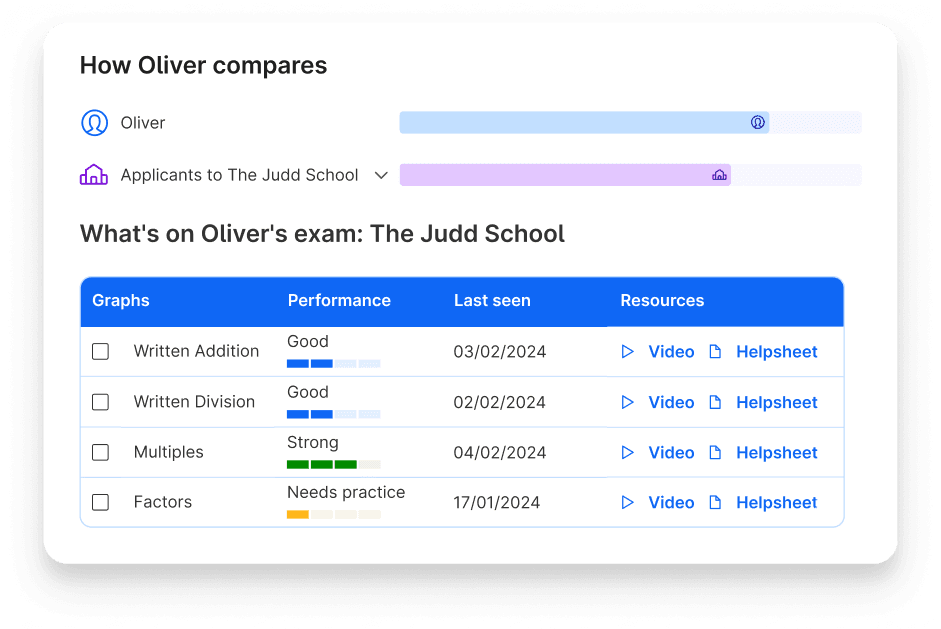
Get the pass mark you need with Atom Home – the leading exam platform for grammar and independent schools.
- Tailored exam prep plans for your child's target schools
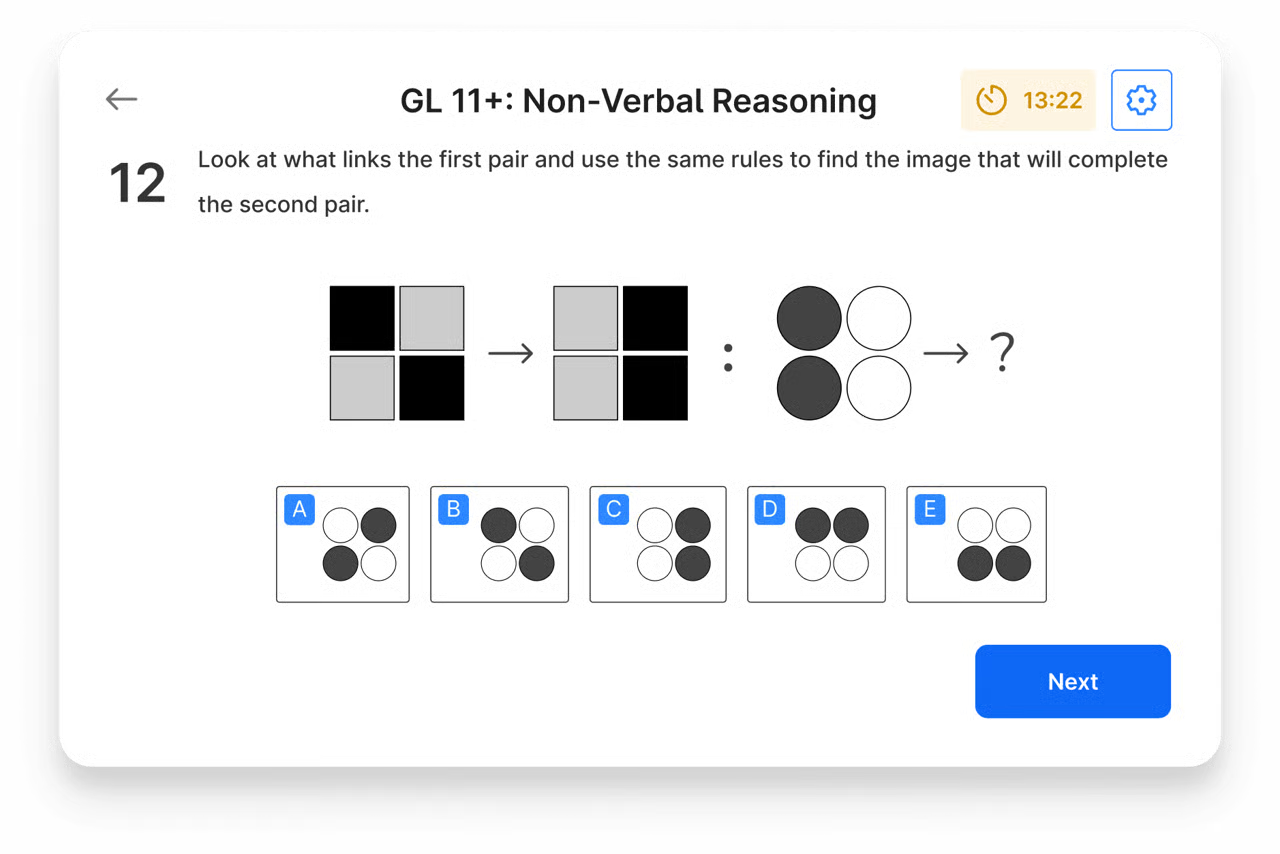
- Practice questions for every 11+ topic
- Unlimited mock tests for every UK exam and school
- Performance data that shows how your child compares to other candidates (plus their standardised age score!)
Join 100,000+ families who trust Atom to help their children excel in Key Stage 2 and entrance exams. Endorsed by grammar schools, loved by parents.
Related posts