

Didn't get your first choice secondary school offer? Here's what to do next

If National Offer Day didn't go the way you hoped, you're not alone, and you're not out of options.
Every year, some families are offered a school further down their list than they wanted, or a school they didn't apply for at all. This guide covers exactly what happens next: how to make sense of the offer you did get, what waiting lists and appeals actually involve, and how to help your child feel steady about September.
In this guide:
- What it means if you weren't offered any of your preferred schools
- Whether to accept the place you've been given
- How waiting lists work, and how to join one
- What an appeal actually involves
- What else you can do, including applying to other schools
- How to help your child process the news
- Getting ready for September
What does it mean if I wasn't offered any of my preferred schools?
If your child met the qualifying score but didn't get an offer, it means the school or schools you named didn't have space for your child, once their admissions criteria (sibling links, catchment distance, faith requirements, or similar) were applied. Your local authority will have allocated your child a place at the nearest school with availability instead.
This isn't a reflection of your child, and it isn't personal. Most areas run what's called an equal preference system: every school you listed on your common application form considers your application independently, without knowing where you ranked it. Being offered a lower preference, or none of your preferences, usually comes down to oversubscription at popular schools, not anything you did or didn't do.
Being allocated a different school doesn't affect your right to appeal for the schools you did prefer. Both routes stay open to you, and you can pursue them at the same time.
Should I accept the place we've been offered?
Yes. Accept it, even if you plan to appeal or stay on a waiting list elsewhere. Most local authorities give you a short window to accept, often around two weeks. Declining carries a real risk: if your appeal or waiting list place doesn't come through, you could be left without a confirmed place at all.
Accepting the offered school secures a place while you pursue other options in the background. If a waiting list place or a successful appeal comes through later, you simply move your child to the new school. There's no penalty for having accepted somewhere else first.
How do school waiting lists work?
If you didn't get a school you'd ranked higher than the one you were offered, your child is usually added to that school's waiting list automatically. Check your offer letter to confirm, since a small number of schools ask you to request this yourself.
Two things surprise most parents about waiting lists:
Position isn't based on how long you've waited.
Lists are ordered by the school's own admissions criteria, the same criteria used to allocate places in the first place. A child can join a waiting list in April and move above a child who's been on it since March, if they meet the school's priorities more closely (for example, a sibling starting at the school, or a house move into catchment).
Your position can go down as well as up.
New applications, house moves, and changes in circumstances get factored in continuously, so a list is re-ranked each time, not fixed.
Schools must keep waiting lists open for at least the first term of the school year, and many hold them open longer. If you're not sure how long a specific school's list stays open, ask their admissions office directly. This varies school to school.
Is it worth appealing, and how does it work?
You have a legal right to appeal to an independent panel for any school on your original application that refused your child a place. It's worth understanding honestly what this involves before you decide whether to go ahead.
The process
You'll submit an appeal form by the deadline stated on your offer letter, commonly around 20 school days after National Offer Day. This varies by local authority, so check your specific letter. An independent panel, separate from the school, then weighs your reasons for wanting the place against the school's reasons for refusing it. Appeals are typically heard within a matter of weeks, usually during May and June for on-time applications.
What panels can and can't consider
Panels check two things: whether the school followed its own rules correctly, and whether your reasons for wanting the place outweigh the school's reasons for sticking to its limit on numbers. A strong appeal is specific: a clear, well-evidenced reason particular to your child, not a general preference for the school.
The honest numbers
Success rates for secondary appeals in England average around one in five, though this varies enormously between schools and areas. A popular, heavily oversubscribed school is a harder appeal than one that's only marginally over capacity. Your local authority can usually tell you a school's appeal statistics from previous years; it's worth asking for before you commit time to the process.
An appeal is a reasonable, worthwhile option for many families. It's just sensible to go in with realistic expectations, and with a waiting list place or accepted school as your safety net either way.
What if we want to look at schools we didn't originally apply to?
You're not limited to your original preferences. You can apply for a place at any school with a vacancy at any point in the year. This is called an in-year application, and it works separately from the main March offer round. Contact the school's admission authority directly, or your local authority for community schools, to ask about current availability.
This is worth exploring if, having had time to reflect, a school you didn't originally consider now looks like a genuinely better fit: closer to home, better suited to your child, or simply one you hadn't visited before results changed your thinking.
How do I help my child process the news?
Your child is processing the same disappointing news you are, and the small, simple things help more than you might expect.
A few things that genuinely help:
Let them feel disappointed, without rushing to fix it.
Children need a moment to be upset before they're ready to hear about next steps. Naming the feeling, saying something like "this is genuinely disappointing, and it's okay to feel that," usually helps more than immediately pivoting to solutions.
Be careful of what they overhear about the school they've been offered.
Children pick up on your frustration far more than you might think. Whatever you're doing behind the scenes (appealing, joining a waiting list, looking into other options), try to keep your child's day-to-day experience of the offered school neutral or positive until something actually changes.
Give them something concrete to look forward to.
Uncertainty is what makes this stressful for children, not the outcome itself. A school visit, meeting one child who'll be in their form, or simply knowing what happens next gives them something solid to hold onto.
Remember what actually matters longer term.
Which secondary school a child attends is one part of their story. It isn't the whole of it. The friendships they build, the confidence they carry into new challenges, and the sense that they can land on their feet after a setback: those are the things that shape how they handle the next disappointment, and the one after that. That's true whichever school gates they walk through in September.
Getting ready for September
Whatever school your child ends up at, a few practical steps make the transition smoother:
- Contact the school directly about transition days, uniform suppliers, and what to expect in the first week. Most run some kind of induction for children who join later in the process.
- Arrange an informal visit if one hasn't been offered. Seeing the building and meeting a member of staff face to face takes a lot of the fear out of the unknown for most children.
- Try to connect with one other family heading to the same school. Even a single familiar face on the first day makes a real difference.
- Keep the tone at home matter-of-fact. Children take their emotional cues from parents. Calm, practical conversation about September works better than either forced positivity or visible anxiety.
Help your child ace the 11+
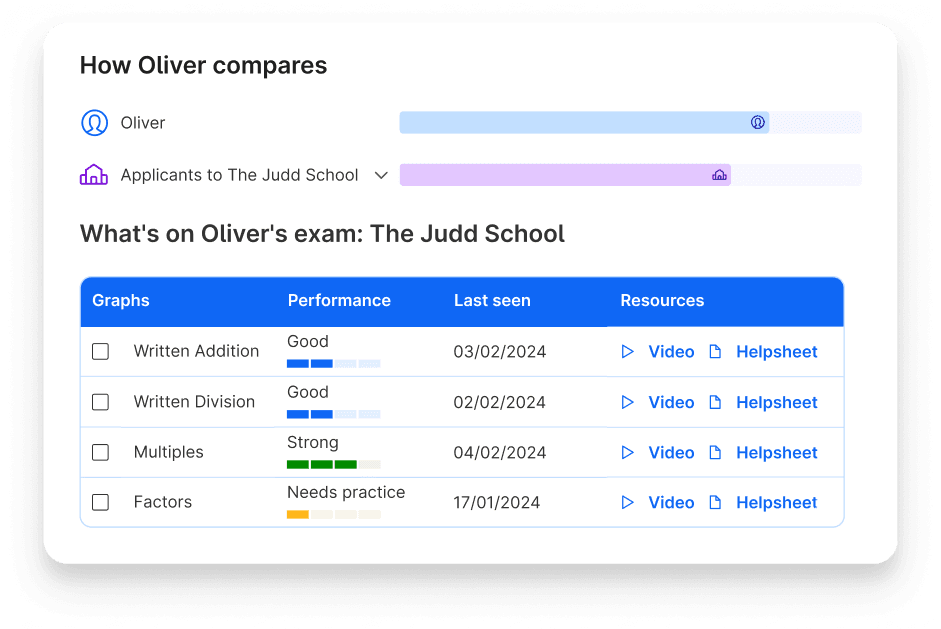
Get the pass mark you need with Atom Home – the leading exam platform for grammar and independent schools.
- Tailored exam prep plans for your child's target schools
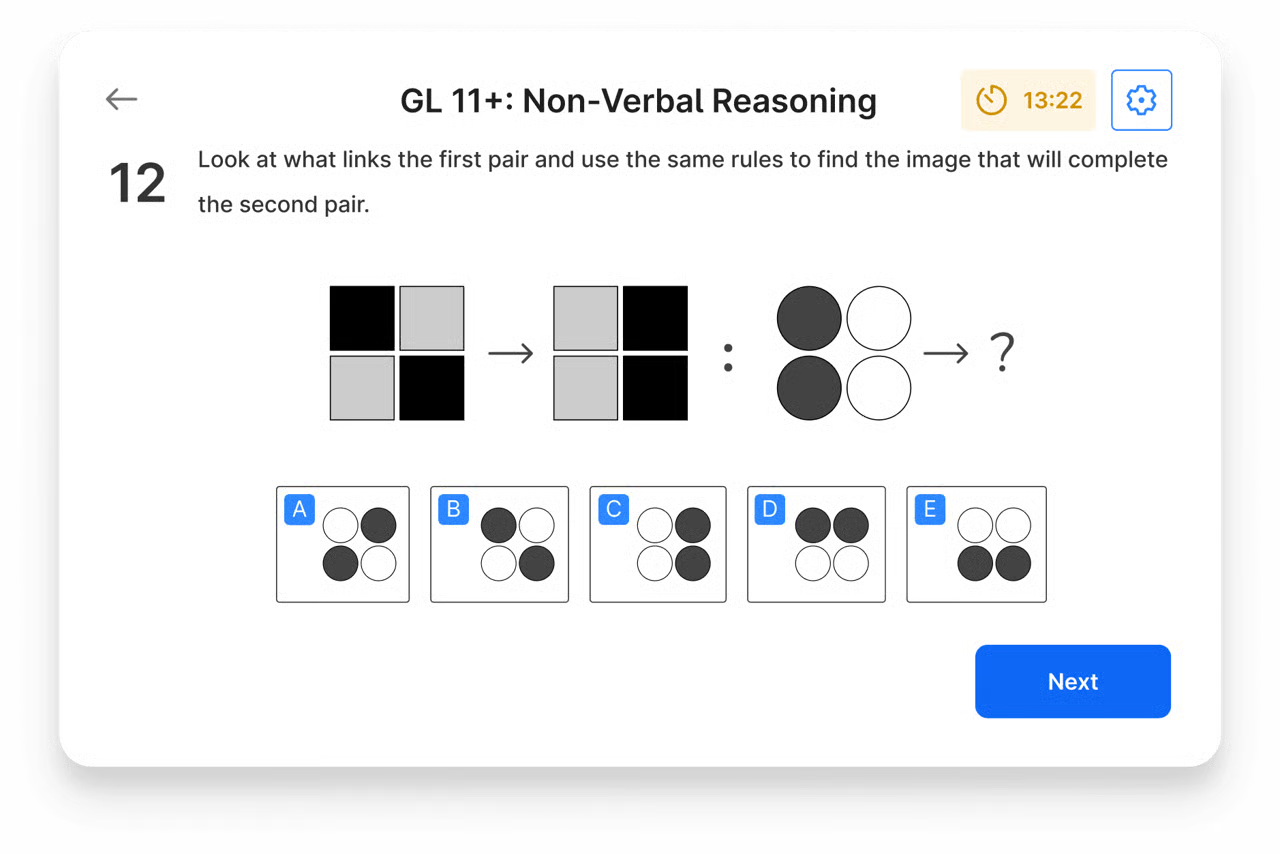
- Practice questions for every 11+ topic
- Unlimited mock tests for every UK exam and school
- Performance data that shows how your child compares to other candidates (plus their standardised age score!)
Join 100,000+ families who trust Atom to help their children excel in Key Stage 2 and entrance exams. Endorsed by grammar schools, loved by parents.
Related posts