Grade boundaries
It's important to remember that the exact grade boundaries for your exams will change every series. Oxford AQA sets them after each exam, based on how difficult the paper was and how the whole cohort performed.
You can check the official Oxford AQA International GCSE grade boundaries to see how past series have landed. Use these as a general guide only. Don't treat last year's boundary as a fixed target for your own exam.
What texts and topics will I study?
For Paper 1, you'll study literary non-fiction such as autobiography, biography, letters, memoir and travel writing, focusing on one text in depth.
For Paper 2, you'll practise reading and comparing shorter, modern-themed texts, which might be fiction or non-fiction and can include visual material. If your school uses the non-exam assessment route instead, you'll carry out independent research on a topic agreed with your teacher.
Your teacher will confirm exactly which texts and route your school is using, since this can vary between schools and years.
5 top revision tips
1. Track how the writer's tone or focus changes across the whole text.
Paper 1 Section A always includes a question about the text as a whole, so isolated quotes aren't enough. You need a sense of how the piece develops from start to finish.
Top tip: as you read, jot a one-word label in the margin for each paragraph's mood or focus, such as hopeful, tense or reflective. When you spot a change, that's often exactly what a whole-text question is looking for. Atom lets you practise this question type again and again, reflecting the real exam structure, so you have time throughout your revision to build familiarity with it and feel confident going into the answer.
2. Get comfortable comparing multiple sources at once.
Paper 2 gives you 5 to 6 texts, and at least one question asks you to consider two of them together.
Top tip: when you compare two texts, always write about what's similar and what's different, not just one or the other. Comparing texts well is one of the hardest things to judge for yourself, but Atom's feedback tells you immediately whether you've properly compared across texts or just discussed them side by side, so you always know exactly where to sharpen your technique before it counts.
3. Build a clear structural shift into your composition.
Whichever task you choose in Section B, examiners reward writing that's deliberately shaped, not just a flat retelling of events or description of a scene.
Top tip: plan one clear turning point, such as a change in mood, pace or focus, partway through your piece, since this is exactly the kind of structural choice higher-level answers are rewarded for. Structural choices like this are easy to plan but hard to judge in your own writing, so Atom's feedback tells you straight away whether your turning point actually comes through on the page or gets lost, meaning you can refine it question after question until it lands every time.
4. Match your directed writing to the exact audience and purpose given.
Paper 2's writing task is always linked to the reading sources, so your answer needs to reflect the audience and purpose stated in the question, not just the topic.
Top tip: underline the audience and purpose in the question before you start, so your tone stays consistent throughout. This is exactly the kind of judgement call that's nearly impossible to make on your own, but Atom checks it every time you practise, telling you straight away whether your tone actually landed with the right audience, marked and explained against AO2, so you always know where you stand before exam day.
5. Practise timed past papers under real exam conditions.
Understanding the format on paper is one thing. Writing at exam speed is a different skill, and it only comes from practice.
Top tip: Atom's GCSE past papers are a good way to build up this timed practice alongside your school's resources. Atom's predicted papers mirror the real exam format and timing down to the minute, so you can sit a full paper under proper conditions and get feedback straight after showing you exactly where your pace or detail dropped off, giving you time to fix it well before the real thing.
Past papers and resources
Oxford AQA's past papers and mark schemes are accessed through your school's teacher login, so ask your teacher for copies if you haven't worked through any yet. The official Oxford AQA English Language page is a good starting point for anything else you need to check.
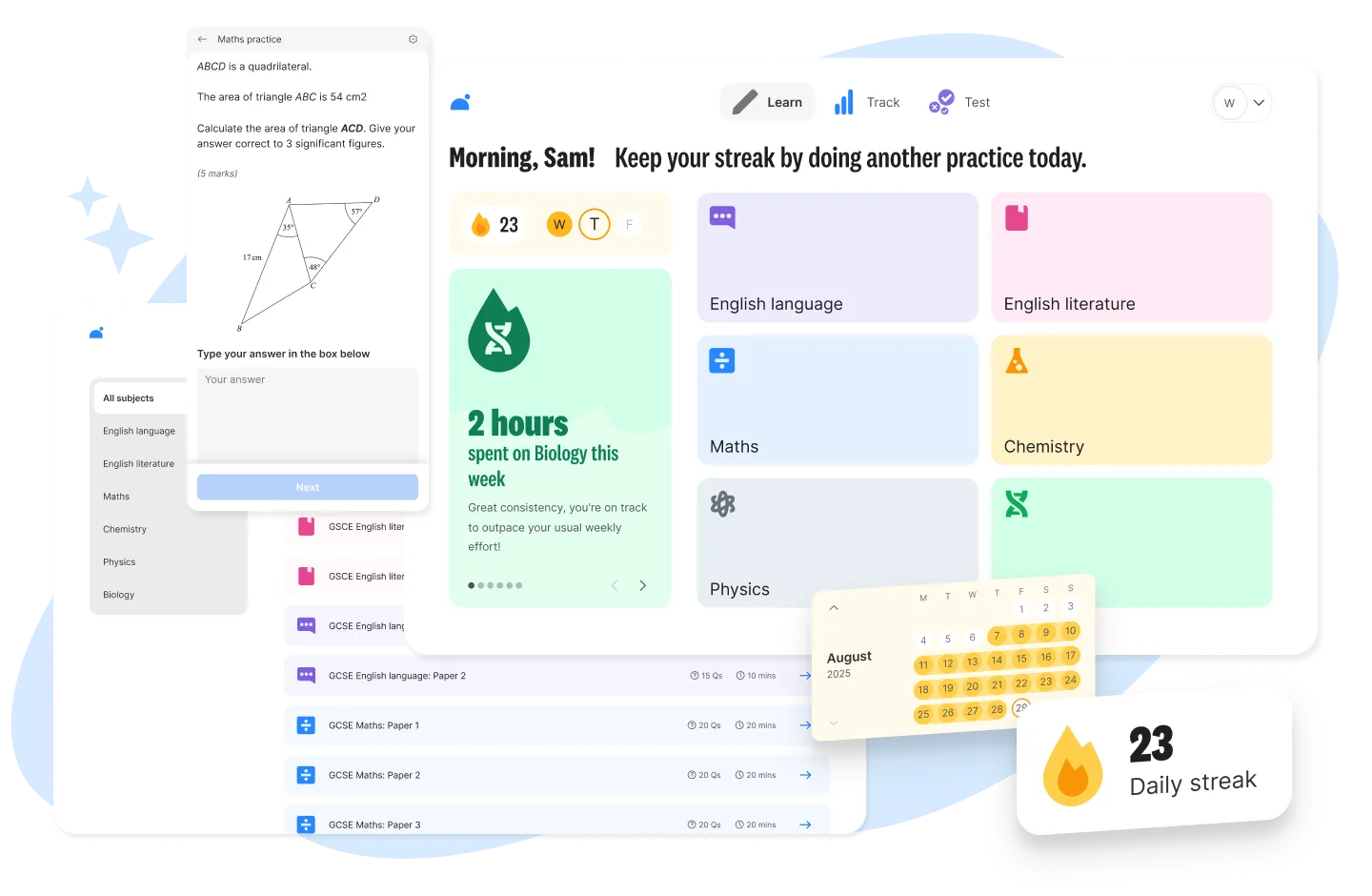
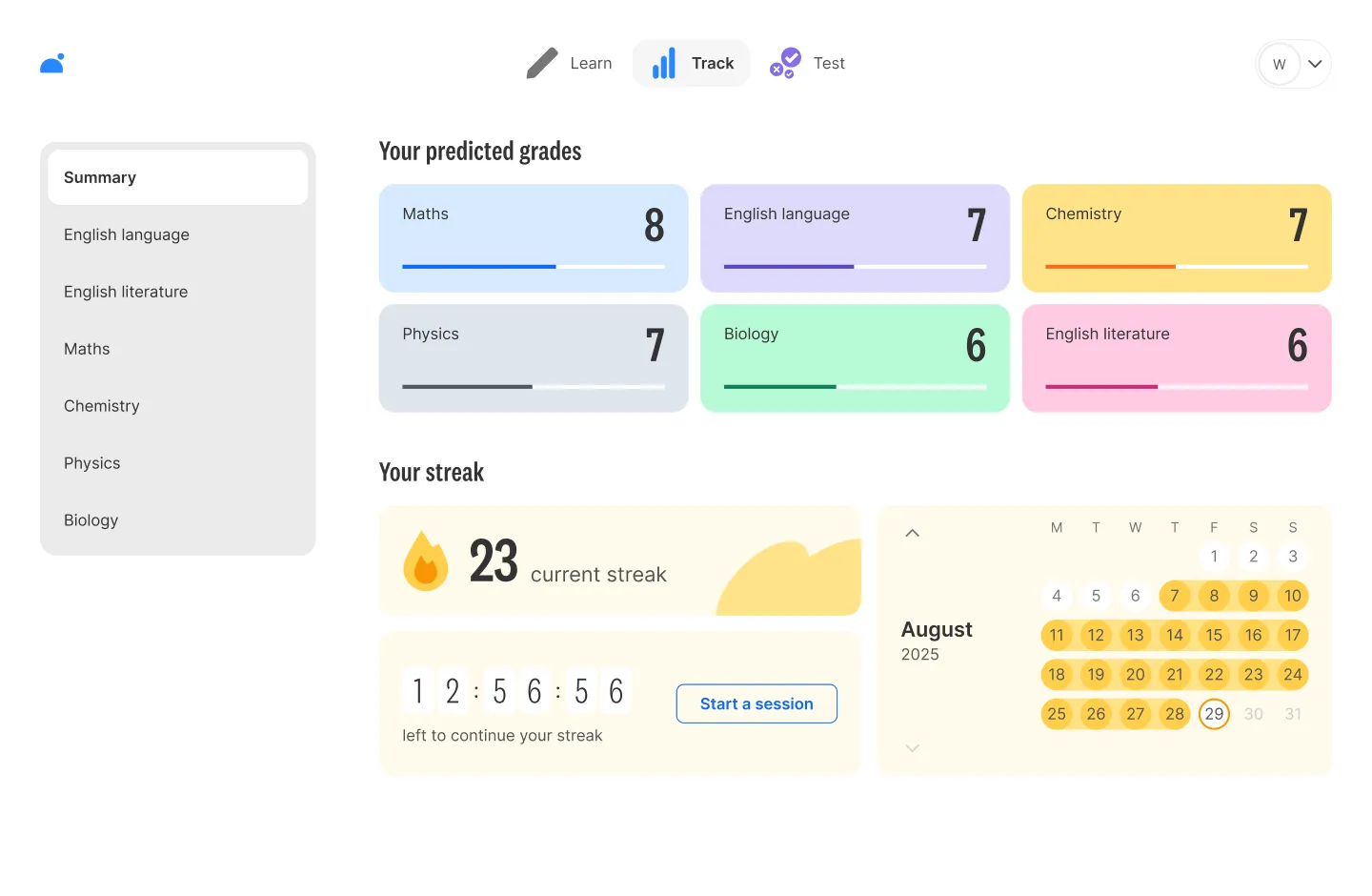
Alongside these, Atom gives you practice papers with instant, examiner-style feedback, so you can see exactly where you're gaining and losing marks as you go. Take a look at our guide on how to get the most out of GCSE past papers for a simple way to build this into your revision.
Once you're clear on how Paper 1 and Paper 2 (or your non-exam assessment) fit together, you can plan your revision around exactly what each part is testing, rather than guessing at what might come up.