

Which UK schools send students to the Ivy League? (2026 guide)
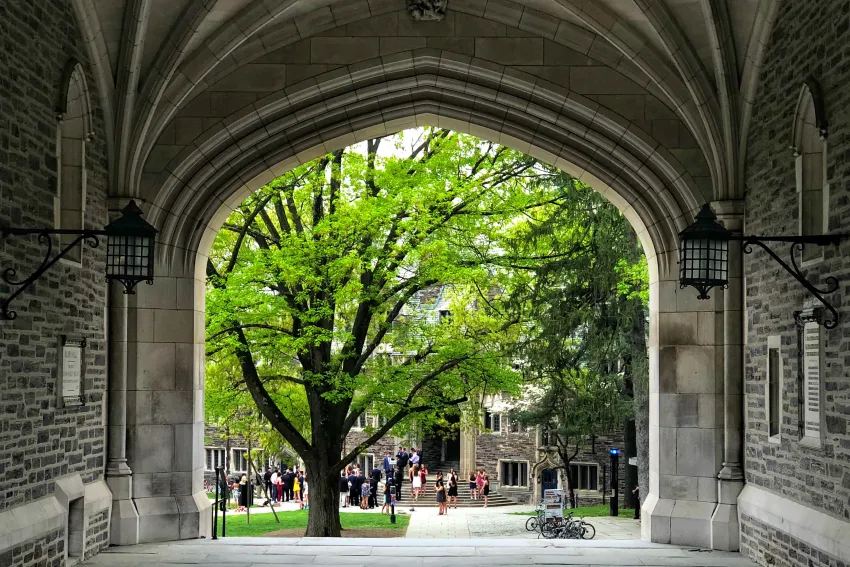
Applications from UK students to US universities are rising year on year, and the leaver destination data from the UK's top schools reflects that shift. Westminster, St Paul's, and King's College School Wimbledon alone placed more than 60 students at Ivy League universities in 2025.
This guide pulls together that data, explains how the US application process works for UK students, and helps you understand whether it's a path worth considering for your child.
What is the Ivy League?
The Ivy League is a group of eight private research universities in the northeastern United States: Harvard, Yale, Princeton, Columbia, Penn, Brown, Dartmouth, and Cornell.
They're consistently ranked among the best universities in the world, and demand for places has never been higher. More students are applying every year, and the proportion being accepted continues to fall, meaning competition in 2026 is at its most intense.
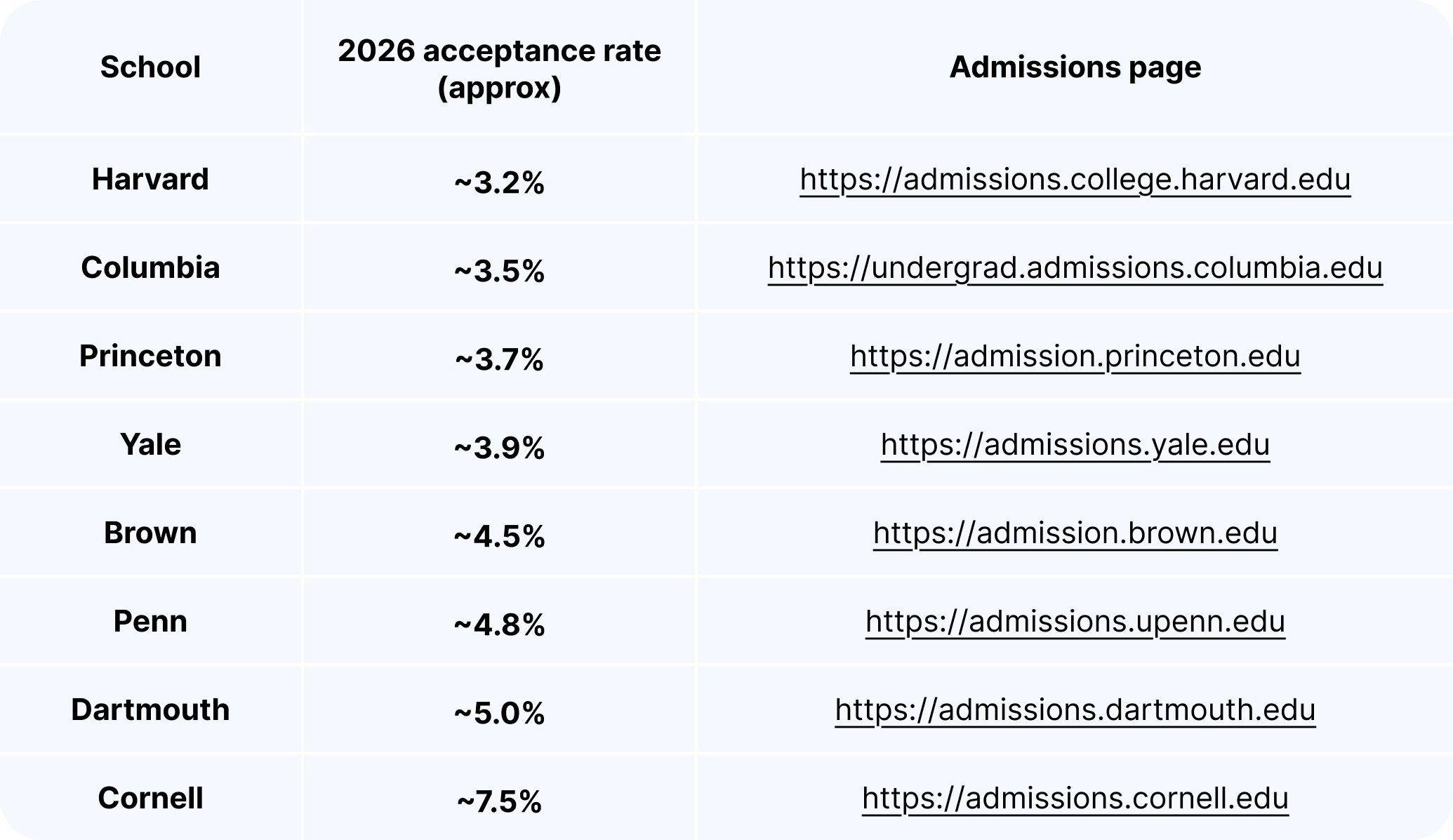
Acceptance rates are approximate and vary year to year. For the latest figures, visit each university's admissions page directly.
It's also worth knowing that the Ivy League isn't the only marker of elite US education. MIT, Stanford, University of Chicago, Duke, and Johns Hopkins are all in the same bracket in terms of selectivity and global reputation and are increasingly on the radar of UK applicants, alongside the Ivies.
Why are more UK students considering the Ivy League?
The Ivy League offers a distinctive university experience and for the right student, a compelling one. Here's what draws UK families to it:
A different academic structure.
Students spend their first two years exploring a range of subjects, giving them time to find the right fit before committing to a major that shapes the rest of their degree.
An immersive campus experience.
Residential campuses, hundreds of clubs and societies, and a strong sense of community that tends to stay with students well beyond graduation.
Alumni networks that stay active.
Ivy League graduates tend to stay connected through formal networks, mentorship programmes, and recruiting pipelines that can be particularly valuable for students with ambitions in the US or global job market
Financial aid that's worth investigating.
Several Ivy League schools assess what your family can genuinely afford and fund the rest, meaning the actual cost can be significantly lower than the headline tuition figure. Harvard, Yale, Princeton, Dartmouth, and MIT do this for international students as well as domestic ones. It's worth looking into before ruling it out on cost grounds
A pathway that's more accessible than it used to be.
Schools now publish US destinations data openly. Many leading independent schools have dedicated US university counsellors. What once felt like an exceptional route is now a realistic one for the right student with the right preparation
Which UK schools send the most students to the Ivy League?
Given that most Ivy League schools admit fewer than 5% of applicants from a global pool, the placement numbers coming out of a handful of UK schools are worth paying attention to.
These aren't one-off results; they reflect consistent, year-on-year outcomes backed by serious institutional support for US university applications.
The schools with the most consistent and best-documented Ivy League placements are almost all in the independent sector.
Here's where the data stands for 2025:
Westminster School
Westminster has topped the HSBC Hurun Education Global Highschools ranking for three years running, a list that ranks schools worldwide by the quality of their university destinations.
Over the past three years, more than 40% of Westminster's 200 annual graduates have gone to Oxbridge or the Ivy League combined.
In 2025 specifically, 19 students enrolled across all eight Ivy League schools:
- Columbia 4
- Yale 4
- Harvard 3
- Brown 2
- Cornell 2
- Dartmouth 2
- Princeton 1
- Penn 1
Westminster is a London day school (with some boarding) that selects at 13+ for boys and 16+ for girls. Entry at 13+ is via pre-test and Common Entrance.
Source: Westminster School A-level results 2025
St Paul's School
St Paul's is one of only a handful of schools in the world with a consistent track record of placing students at every Ivy League school.
In 2025, 32 pupils accepted places at top American universities, including three each to Harvard, Yale, and Dartmouth, and one to MIT. Of pupils who go on to UK universities, over a quarter go to Oxford or Cambridge.
The school is a day school in West London, selecting at 13+ via pre-test and Common Entrance.
Source: St Paul's School university destinations 2025
King's College School, Wimbledon
KCS Wimbledon received 17 Ivy League offers for its 2025 leavers, with confirmed places including two students to Harvard, two to Yale, and sport-recruited students to Princeton and Brown. Other 2025 US destinations included Stanford and USC. Good Schools Guide notes that interest in US universities at KCS is "growing" year on year.
The school is a boys' school with a co-educational sixth form, selecting at 11+ and 13+.
Source: King's College School leavers 2025
Winchester College
Winchester College is a fully boarding school and one of the most academically distinguished in the UK. According to the HSBC Hurun Global Highschools 2025, more than 20% of Winchester's graduates go to Oxbridge or the Ivy League annually, based on a three-year average.
Source: HSBC Hurun Education Global Highschools 2025
St Paul's Girls' School
St Paul's Girls' ranks fourth globally in the HSBC Hurun Education Global Highschools. This is an annual ranking of the world's leading schools based on university destinations, co-curricular provision, and reputation.
On average over the past three years, more than 40 of its 120 annual graduates go to Oxbridge or the Ivy League, a striking proportion given the size of the year group.
Source: HSBC Hurun Education Global Highschools 2025
Dulwich College
Dulwich publishes Ivy League placements, including Harvard and Yale, as part of its leavers' destinations listing, alongside Oxbridge, Russell Group, and leading institutions in Europe and the US.
Source: Dulwich College leavers' destinations
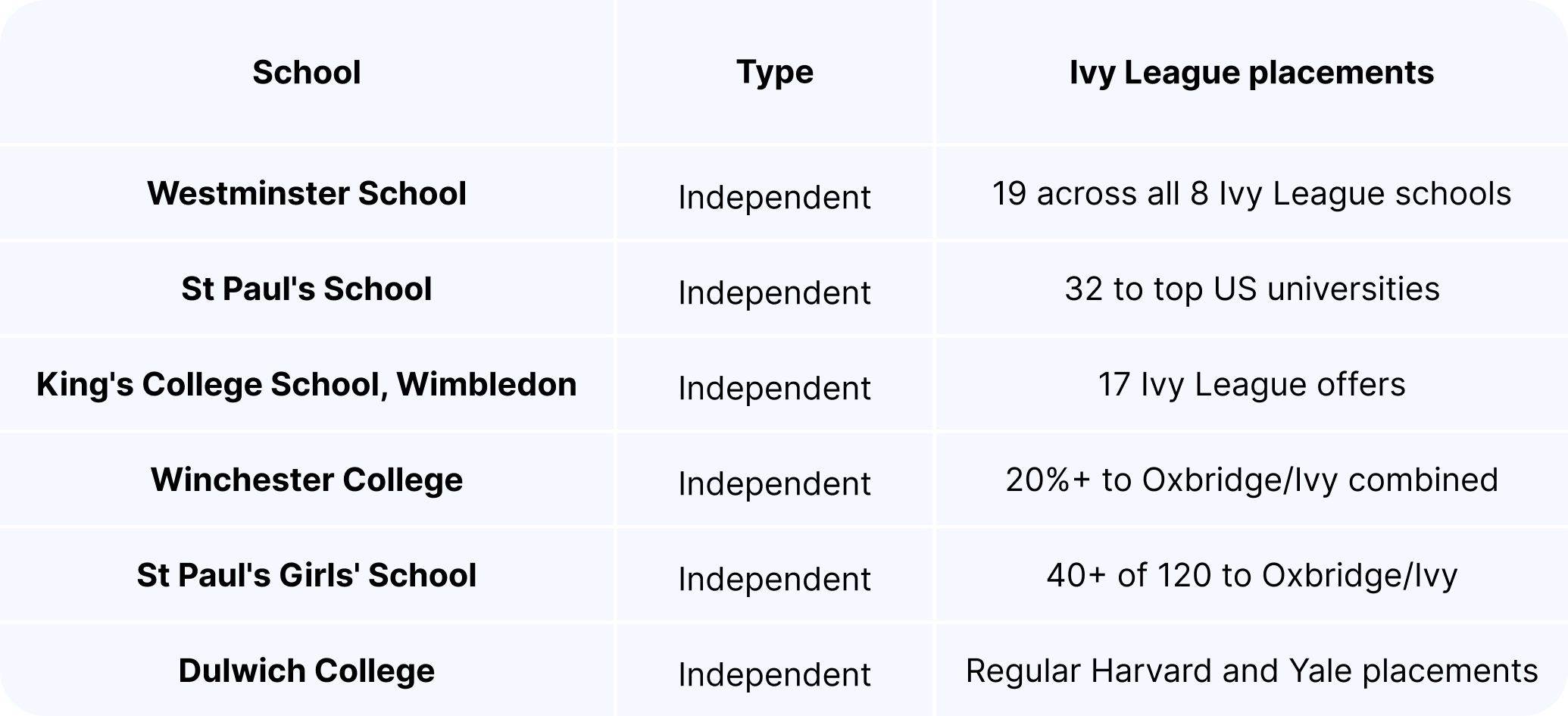
The schools above are summarised in the table below for easy reference:
What about grammar schools?
It's worth noting that a small number of grammar schools are beginning to appear in US university destination data.
Tiffin School reported two students heading to Princeton in 2025, and St Olave's Grammar School reported two students heading to US universities in the same year.
For state-funded schools without dedicated US university counselling or established application infrastructure, these results are worth celebrating and a promising indication that the pathway is opening up beyond the independent sector.
What does it take to get into an Ivy League university from a UK school?
The US admissions process is fundamentally different from UCAS. Understanding how it works is the first step.
The Common App
Most Ivy League applications (except MIT) are submitted through the Common Application, a centralised platform similar in function to UCAS but considerably more involved. You can apply to multiple schools on one application, but each school also requires supplemental essays specific to them.
Test scores
Several Ivy League schools, including Harvard, Yale, Brown, and Dartmouth, have reinstated standardised testing requirements after pausing them during the pandemic.
For UK students, this typically means sitting the SAT (or ACT), which tests maths and evidence-based reading and writing. The SAT is administered at test centres in the UK, and most serious applicants sit it in Year 12 or the summer before.
UK A-level results are well regarded by US admissions offices, and strong grades provide a solid foundation. That said, the application looks at the whole picture. Academic results sit alongside essays, extracurricular activities, and references, so it's worth understanding each element and giving yourself enough time to prepare them properly.
Deadlines
There are two main admissions rounds:
- Early Decision / Early Action: the deadline is typically 1st November, with results in December. Early Decision is binding; Early Action is not. Applying early can offer a meaningful advantage at some schools.
- Regular Decision: deadline is typically 1st January, with results in late March. Ivy Day, when all eight schools release decisions simultaneously, traditionally falls on the last Thursday of March.
Dates vary by school. Always check each university's admissions page directly.
The personal statement and supplemental essays
The Common App requires a main personal essay of 650 words, plus additional essays specific to each school you apply to. These supplemental essays vary considerably; some are short and reflective, others ask your child to engage with specific aspects of that university's curriculum or culture. It's not unusual to be writing several essays per school. Given that, it's worth starting early and building in time for proper drafting, feedback, and revision.
Extracurriculars
This is where UK applicants sometimes underestimate what's needed. US admissions places significant weight on a student's activities outside the classroom, not breadth for its own sake, but genuine depth and leadership in a few areas. Students are expected to articulate what they've built or led, not just what they've joined.
Financial aid
As mentioned earlier, several Ivy League schools assess what your family can genuinely afford and fund the rest. It's always worth checking each school's financial aid office directly for the latest guidance, as policies can change.
Is the Ivy League right for your child?
The data shows that more UK students are making this journey every year, but it's worth being honest that the Ivy League isn't the right fit for every family.
Academically, your child will need to be performing at the very top of their year group. Strong A-level predictions, exceptional reasoning ability, and genuine intellectual curiosity across subjects all matter.
US admissions looks for students who have pursued something with real depth and commitment outside the classroom, whether that's a sport, a creative discipline, community work, or an academic interest they've taken well beyond the school curriculum.
It's also worth thinking about fit. The Ivy League experience living on campus, a four-year degree, a broad first-year curriculum suits some students and doesn't appeal to others at all. The best outcomes tend to come from students who are genuinely excited by what these universities offer.
If after reading this your child is curious and motivated, that's a good sign. The next step is finding out more.
What to do next
If the Ivy League feels like a realistic and exciting possibility for your child, here's where to start:
Talk to your child's school
Find out whether they have a dedicated US university counsellor or any experience supporting US applications. If not, it's worth looking into independent specialist support early
Look into the SAT
Most serious applicants sit the SAT in Year 12. Registration is straightforward but preparation takes time, so it's worth building this into your plans sooner rather than later
Research financial aid properly
Visit the financial aid pages of each school your child is interested in and use their net price calculators. The figures often surprise families
Read each university's admissions pages carefully
Every Ivy League school has a different personality, different supplemental essay questions, and a different sense of what they're looking for. Understanding this early makes the application process significantly more manageable
Take control of your child’s independent school prep.
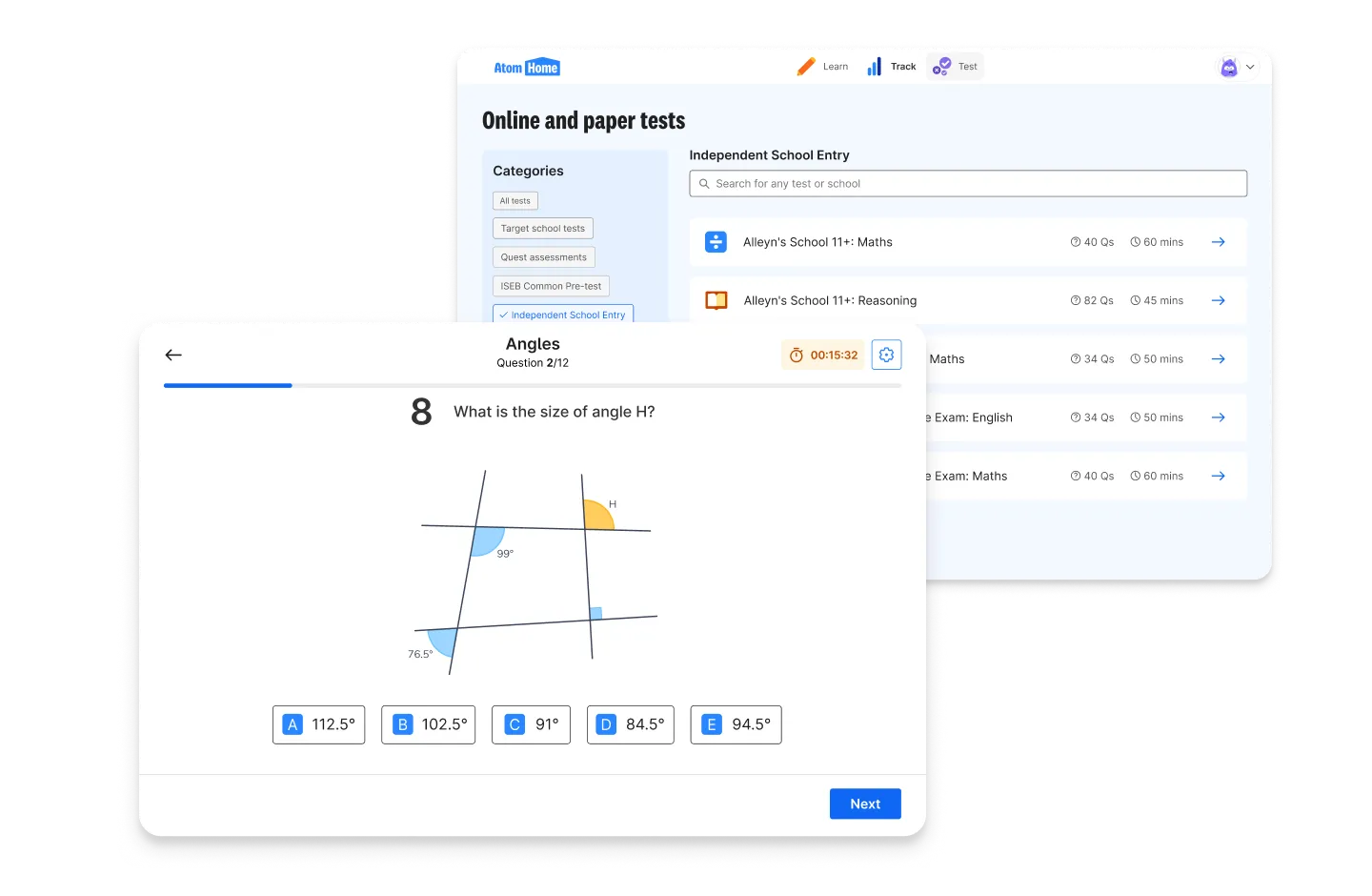
Worried about keeping pace with the competition? Independent school exams can feel unpredictable, but your child’s preparation doesn’t have to be. Atom shows you exactly what to practise and how they’re performing, so you can stay ahead throughout the admissions process.
- Follow personalised weekly exam plans that show them what to learn next.
- Practise with mock tests that replicate their exam and generate new questions every time, so they build real exam skills.
- Track progress and see how they compare to others preparing for the same schools.
Start your free trial and help your child get ready for senior school entry.
Related posts