

How are GCSE grade boundaries actually decided?

Grade boundaries get mentioned constantly around results day, but it's rarely explained how they're actually worked out in the first place. This guide looks behind the scenes at the real process, who's involved, what they're looking at, and why the numbers shift every year.
This blog will cover:
- Why grade boundaries change every year
- What "comparable outcomes" actually means
- The real steps exam boards go through to set them
- Why boundaries were never a fixed percentage
- What this actually means for results day
Why do grade boundaries change every year?
Every exam paper is slightly different, and some are naturally a little harder or easier than the one before. If boundaries stayed fixed at the same raw mark every year, a harder paper would unfairly push everyone's grades down, and an easier one would inflate them.
To stop that happening, exam boards adjust the boundary, the actual number of marks needed for each grade, every single year, once all the marking is complete. That's why the boundary for a grade 7 might sit at a different mark from one year to the next, even in the same subject with the same exam board.
What does "comparable outcomes" actually mean?
The principle behind all of this is called comparable outcomes. In simple terms, it means a grade should represent roughly the same standard of work from one year to the next, and roughly the same proportion of students nationally should achieve each grade, assuming a similarly able group of students is sitting the exam.
To judge whether this year's students are a similarly able group, exam boards look at data from earlier in their education, such as performance in other subjects or in earlier assessments. This gives a sense of what a typical spread of results should look like before a single exam paper has even been marked, and it's this expected spread that boundaries are set against.
How do exam boards actually set the boundaries?
The process happens after marking, not before, and it follows a fairly consistent set of steps across subjects and exam boards.
First, every paper is marked according to a detailed mark scheme, without examiners knowing who a student is. Once marking is complete, statisticians look at how the whole national cohort performed, comparing it with expectations built from the data mentioned above.
Senior examiners then review scripts sitting right around each proposed grade boundary, comparing the quality of the work directly against scripts from previous years at that same boundary. This is a genuine, human quality check, not just a number pulled from a spreadsheet. Only once this review is complete are the final boundaries agreed and submitted to the qualifications regulator, Ofqual, for oversight and sign-off.
Why boundaries were never a fixed percentage
It's easy to assume a grade 4 always needs "around 40%" or a grade 7 always needs "around 70%," but that's not how it works. The percentage needed for the same grade can look quite different from one year to the next, and even between subjects in the same year, because it depends entirely on how that particular paper performed.
This is exactly why looking at previous years' boundaries can only ever give a rough guide, never a target to aim for precisely. A result just a mark or two either side of a boundary was never a sign of a huge gap in ability; it can come down to how one specific paper landed that year.
What does this actually mean for results day?
Knowing how the process works doesn't change the outcome, but it can change how a result feels. A grade near a boundary isn't a near miss caused by a small mistake; it reflects a genuine, carefully reviewed line drawn by people looking at real work, not an arbitrary cut-off.
It's also worth remembering that boundaries are never published in advance, so there's no way to know exactly where they'll fall until results day itself. Our guide to GCSE results day 2026 covers exactly what happens on the day.
The bigger picture
Grade boundaries can feel mysterious, but the process behind them is far more careful and human than it first appears. Understanding that can make the number on a results slip feel less like a lottery, and more like what it actually is: a considered judgement based on real evidence.
Take control of your GCSE revision
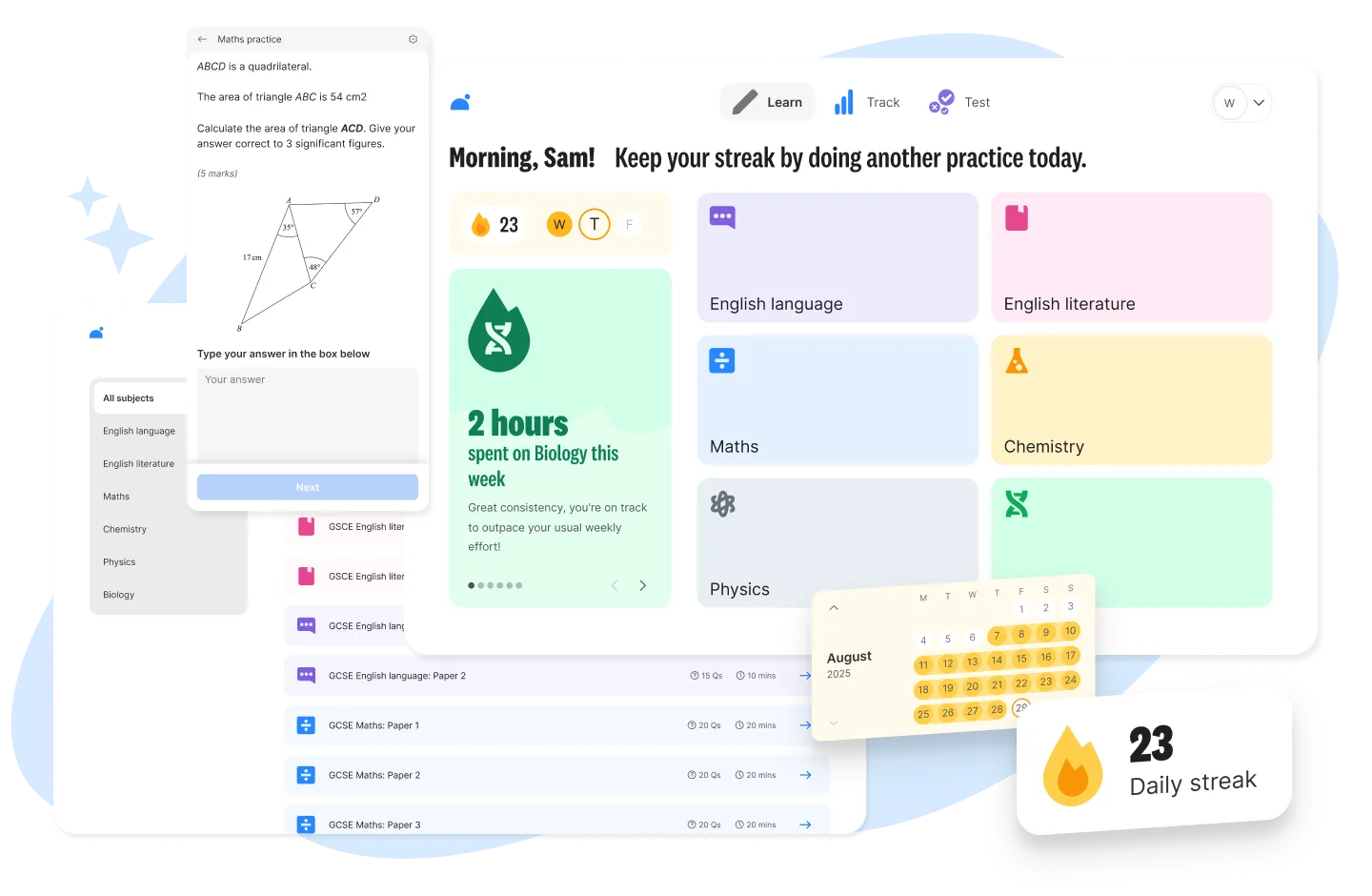
Everything you need for GCSE success, in one place.
Feeling confident about your GCSEs comes from knowing what to revise, how to improve, and where to focus next.
🔮 GCSE practice papers based on our team's 2026 exam predictions
🎓 Guided courses that cover all the topics on your exams
✍️ Instant feedback that tells you where you’ve gained and lost marks
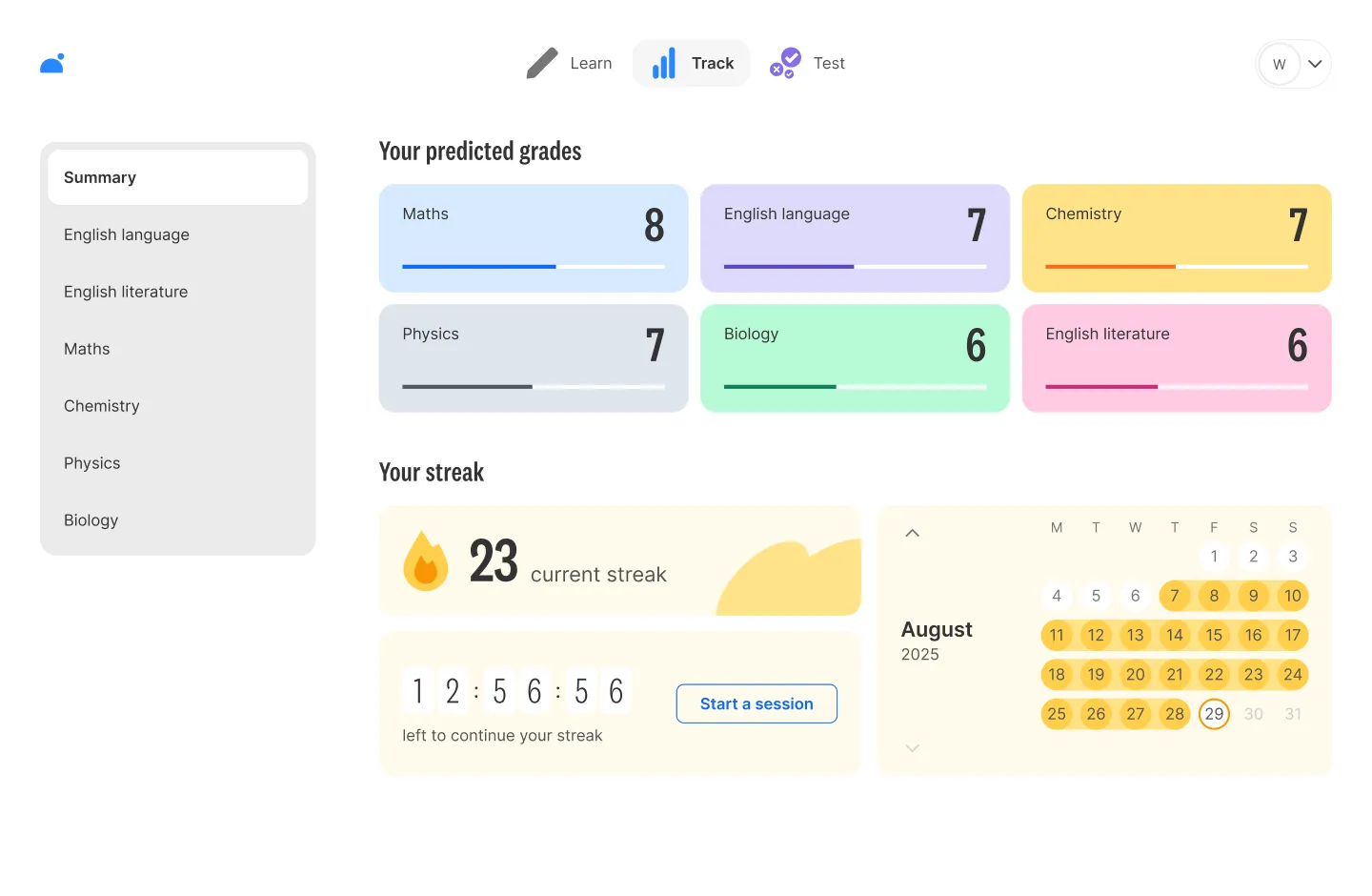
📈 Predicted GCSE grades and topic-by-topic tracking
Create your free account and start making real progress today.
Related posts