

GCSE results day 2026: date, time and how to get your results

Results day brings a mix of nerves and excitement, and that's completely normal, whether you're the one collecting your results or supporting someone who is. This guide covers everything you need to feel prepared: exactly when GCSE results day 2026 falls, what time results come out, and every way you might receive them. Read on to find out more.
This blog will cover:
- When GCSE results day 2026 is
- What time results come out
- The different ways you can get your results
- What to do if you're not collecting them in person
- What happens after you've got your results
When is GCSE results day 2026?
GCSE results day 2026 falls on Thursday 20 August, the same date across England, Wales and Northern Ireland, even though each nation uses its own exam boards.
Schools and exam centres receive the results a day earlier, on Wednesday 19 August, simply so they have time to get everything ready. There's no way to access results before Thursday, so there's no need to spend the Wednesday refreshing an inbox. The wait can feel long, but it's the same for everyone, and it'll be over soon enough.
What time do GCSE results come out?
Most schools release results from around 8am, though the exact time varies from school to school. Some open their doors a little later, and some ask people to arrive at a set time to keep things calm and avoid overcrowding.
There isn't a single national time or app that releases GCSE results, so the most reliable way to find out the exact plan is to check the letter or email the school sent about results day. If that's gone missing, a quick call to the school will usually clear things up well before the day itself.
How can you get your GCSE results?
Schools tend to offer a few different ways to get hold of results, and it's worth knowing all the options in case one suits you better than another:
- In person at school. This is the most common route, and it means there's someone on hand to talk through the results and answer any questions straightaway.
- Through an online school portal. Some schools upload results to a parent or student portal, so they can be checked from home.
- By email. A few schools send results directly by email, especially if this has been arranged in advance.
- By post. For anyone who can't collect in person, some schools will post results, though this naturally takes a little longer to arrive.
Whichever method is used, what arrives on the day is a results slip, not the official certificate. Certificates are printed separately and usually reach schools in October or November, and the school will explain how to collect them once they're ready.
What if you're not collecting your results in person?
Not being there in person on the day is absolutely fine, and there are good options to fall back on.
If the school offers online or email access, it's worth asking in advance how to get this set up. If someone else, like a family member, is collecting results on another person's behalf, most schools will ask for written permission first, so it's worth checking what's needed ahead of the day.
For anyone applying to a sixth form or college who needs to confirm a place quickly, it's usually fine to call and read the grades out over the phone once they're in hand. Admissions teams are used to this and will have staff available throughout the day to help.
What happens after you've got your results?
Once results are in hand, a few small steps now can save some stress later.
It's worth taking a clear photo of the results slip and saving it somewhere safe, like an email or a cloud drive, alongside the original. Grades tend to need confirming more than once over the next couple of years, so having a digital copy ready to send makes that much easier when the time comes.
It's also worth keeping in mind that grade boundaries change every year, depending on how the exam and the wider cohort performed. If a grade feels close to the boundary above, the school will be able to explain exactly how marks were converted to grades for that particular exam board and subject.
If the results aren't what was hoped for, there's no need to panic. Our guide on what happens if you fail your GCSEs covers appeals, resits and other routes forward, calmly and clearly.
What your results actually mean
GCSEs in England are graded on a scale from 9 to 1, with 9 being the highest. A grade 4 is known as a "standard pass," and a grade 5 is a "strong pass." Anything below a 3 is generally considered a fail, though the exact boundary can shift slightly each year.
It helps to know roughly how the new numbered grades line up with the old A* to G system. A 9 broadly sits above an old A*, a 7 is roughly equivalent to an old A, a 4 sits around an old C, and so on. The two systems don't map perfectly onto each other, but this gives a general sense of where a result stands.
For a fuller breakdown of how the grading system works and what each number represents, our guide to how GCSEs are graded covers it in more detail.
Ready for results day
Results day only feels daunting because of the unknowns: the date, the time, how the results will actually reach you. Take those away, and what's left is just a day, one that ends with an answer you've been waiting months for.
However the results turn out, they're a starting point, not a final verdict. There's always a next step, whether that's celebrating, resitting, or simply working out what comes next, and support is there whichever one it is.
Take control of your GCSE revision
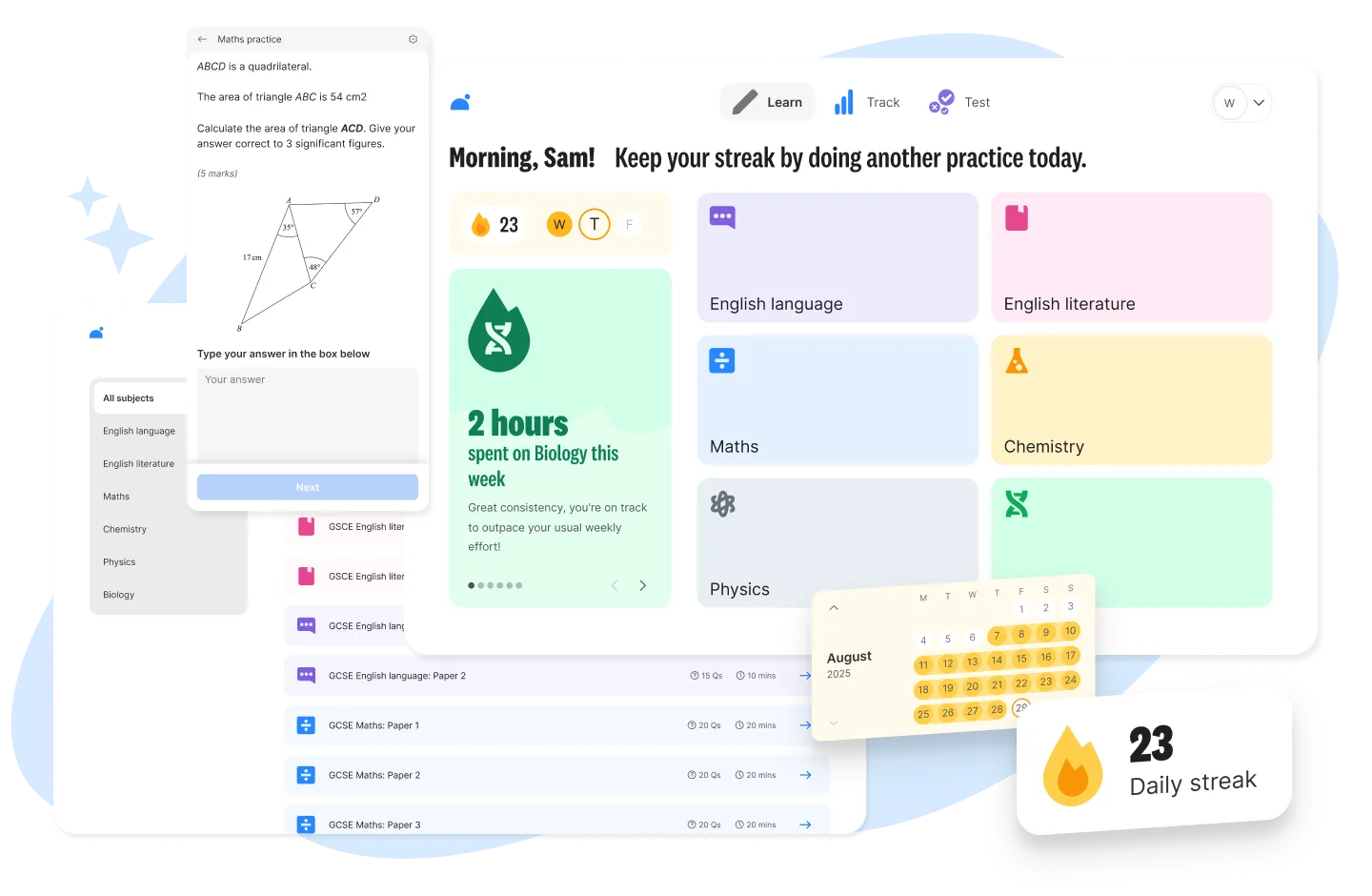
Everything you need for GCSE success, in one place.
Feeling confident about your GCSEs comes from knowing what to revise, how to improve, and where to focus next.
🔮 GCSE practice papers based on our team's 2026 exam predictions
🎓 Guided courses that cover all the topics on your exams
✍️ Instant feedback that tells you where you’ve gained and lost marks
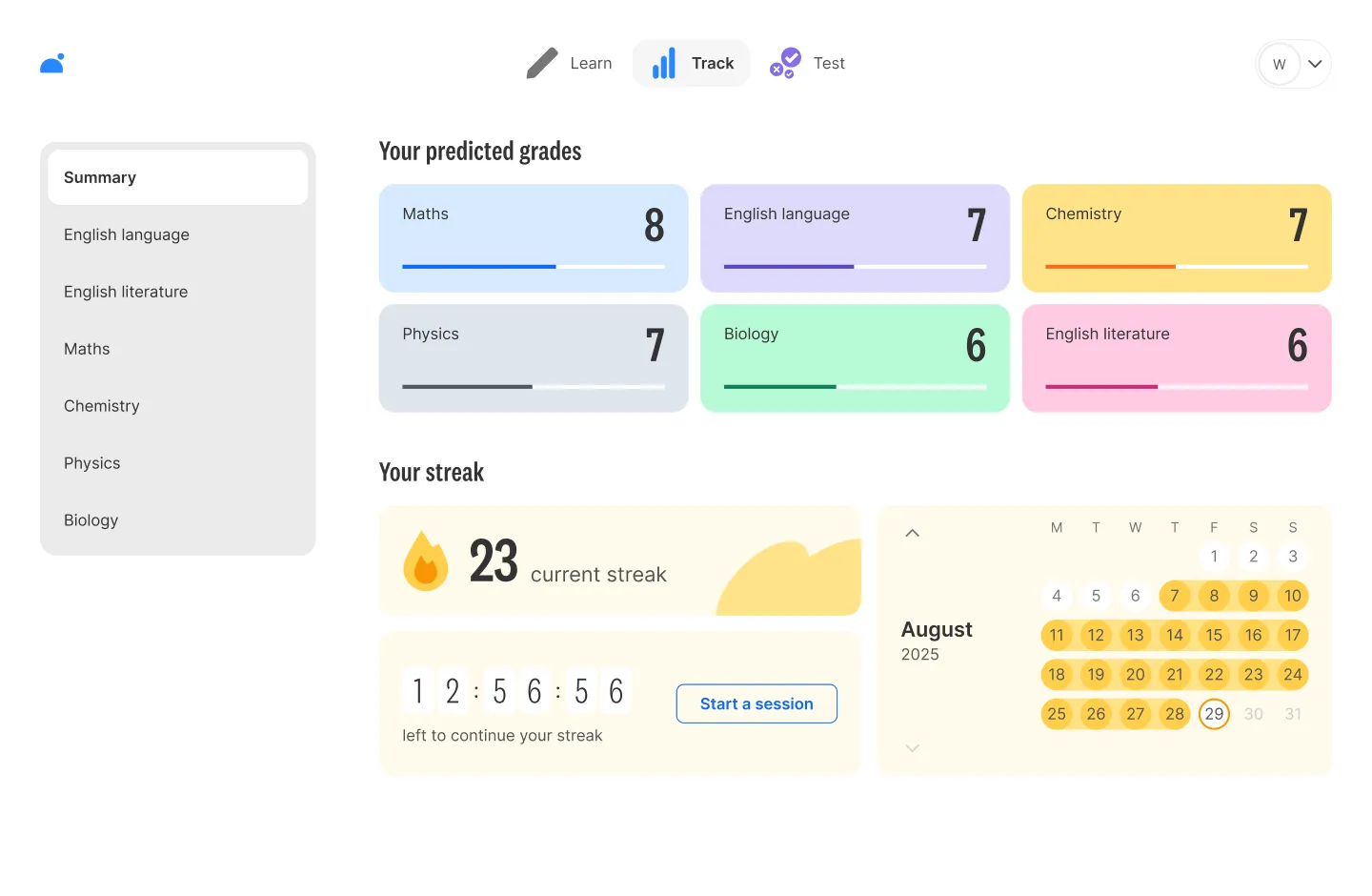
📈 Predicted GCSE grades and topic-by-topic tracking
Create your free account and start making real progress today.
Related posts