
How to prepare for the 11+ in Year 3 and 4

Most parents don't start thinking seriously about the 11+ until Year 5. By then, the exam is close, the preparation is intensive, and the pressure is real.
The families who find that stage manageable tend to have one thing in common: they started earlier.
Years 3 and 4 are the right time to begin, not because the 11+ is imminent, but because it isn't. The distance between now and exam day is your most valuable resource. Used well, it means your child arrives at Year 5 with foundations already in place, familiar with the question types, and confident in the process.
This guide covers what the 11+ actually involves, what preparation looks like at this stage, and what you can do now that is both effective and age-appropriate.
What is the 11+?
The 11+ is the entrance examination used by grammar schools and some selective independent schools to select pupils for Year 7.
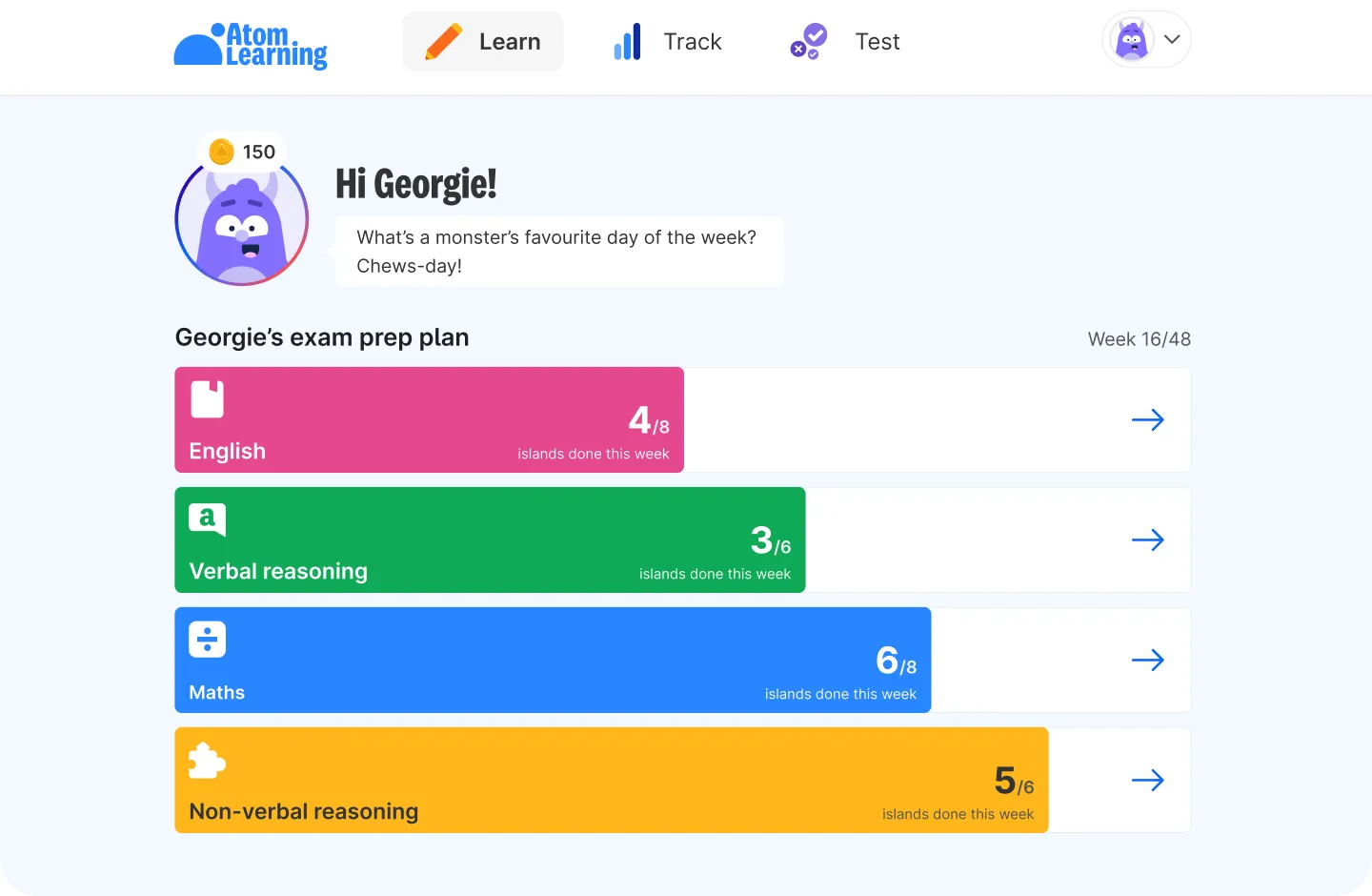
The exam varies by region and by school, but despite these variations, most 11+ and selective entrance exams assess the same four core subjects:
- English — reading comprehension, vocabulary, and creative or structured writing
- Maths — arithmetic, problem solving, and topics that often extend beyond the primary curriculum
- Verbal reasoning — logical thinking using words, letters and language patterns
- Non-verbal reasoning — logical thinking using shapes, patterns and visual rules
English and maths are taught in school, though the 11+ versions can test at a level above the standard curriculum. Verbal and non-verbal reasoning are not taught in school at all, which is one of the most important things for parents to understand early on.
Why Year 3 and 4?
The case for starting now isn't about pressure. It's about time, and what time makes possible.
The skills that matter most in the 11+ don't develop quickly. They accumulate. Wide reading, strong vocabulary, confident mental maths, the ability to think clearly under pressure. These are built over months and years, not weeks.
A child who has been building those habits steadily since Year 3 or 4 arrives at Year 5 with something that simply can't be replicated last-minute: deep familiarity, genuine confidence, and foundations that hold up when it counts.
Year 3 and 4 is exactly when that accumulation can happen naturally, before the pressure arrives. There's time to build good habits without forcing them. Time for reading to become something your child enjoys rather than something they endure. Time for maths to feel fluent rather than frantic.
Starting now doesn't mean past papers or exam drills. It means giving your child the time and space to build real understanding, so that when Year 5 comes, they're already working from a place of strength.
What does good preparation look like in Year 3 and 4?
Before thinking about tutors, workbooks or practice papers, there's a more fundamental question worth answering: what is your child's current level across the subjects the 11+ tests?
Most parents have a general sense of how their child is doing at school, but general impressions aren't the same as a clear picture of 11+ readiness. A child can be doing well in class and still have specific gaps that matter for selective exams.
Good preparation at this stage looks less like formal exam practice and more like:
- Building a consistent daily reading habit and broadening vocabulary naturally
- Regular, short maths practice — mental arithmetic, times tables, and problem solving
- Gentle, low-stakes exposure to verbal and non-verbal reasoning question types
- Short, consistent sessions rather than long, infrequent ones
The research on this is consistent: regular practice in short bursts produces significantly better outcomes than intensive, sporadic effort. Seventeen minutes a day adds up to over a hundred hours of practice a year. That accumulation, steady, targeted, unremarkable, is what makes the difference by exam day.
Not sure which areas to focus on first? Atom is designed exactly for this stage: daily sessions that adapt to where your child is, so every minute spent practising is a minute that counts.
How to talk to your child about the 11+
Most children in Year 3 and 4 are aware that secondary school exists, but have no strong feelings about it.
The goal of any conversation at this stage isn't to explain the stakes; it's to make 11+ preparation feel like a normal, unremarkable part of the week. Children take their emotional cues from parents. If the 11+ is introduced as something pressured and serious, it will feel that way. If it's introduced as something interesting and manageable, it usually stays that way.
A few principles worth keeping in mind:
- Introduce practice as a habit rather than an event
- Frame getting something wrong as part of the process, not a setback
- Avoid comparisons to other children; instead, focus conversations on what your child is learning and building rather than how they are performing
The children who arrive on exam day feeling calm and capable aren't the ones who were pushed hardest. They're the ones where preparation became part of the routine, something they just did, consistently, over time.
Grammar school vs independent school: does preparation differ?
The short answer is: not significantly at this stage.
Grammar schools and independent schools both test English, maths, verbal reasoning and non-verbal reasoning, though the specific format, weighting and difficulty level vary for each school. The core preparation in Years 3 and 4 is reading, maths fluency, and familiarity with reasoning, and is appropriate whichever route you are considering.
Where preparation begins to differ is in Year 5, when it becomes important to understand the specific exam format of your target schools, whether that's GL Assessment, Quest Assessments, the ISEB Common Pre-Test, or a school's own paper. In Years 3 and 4, the foundations are universal.
The question parents ask most: are we doing enough?
This is the anxiety that runs through almost every conversation about the 11+ in Year 3 and 4. Parents compare notes and wonder whether their approach is leaving their child behind.
The honest answer is that more preparation is not the same as better preparation. Enough looks like this: a child who reads regularly, practises consistently in short sessions, and is building familiarity with the subjects the 11+ tests — without dreading the process.
That's it. Children who arrive to exam day feeling confident and ready aren't necessarily the ones who did the most. They're the ones who showed up consistently, built genuine understanding over time, and didn't burn out before the exam arrived. Starting now, calmly and at the right level, is exactly enough.
The next step is simpler than you think
You've read the guide. You know what matters: starting early, building steadily, and letting familiarity do the work that intensity can't. The families who arrive at exam day feeling prepared made one good decision early and kept showing up.
The only thing left is to begin.
Sixteen minutes a day. That's all it takes.

A short daily session on Atom does more than you'd expect. It builds a habit. It builds confidence. Day by day, it builds a child who sits down to learn without being asked, because they actually enjoy it.
Atom adapts to your child's level, so they're always practising the right things. Not too easy, not too hard. Just right.
- Follow personalised daily practice plans that adapt to your child's level automatically
- Build real understanding across maths, English and reasoning in just 16 minutes a day
- Watch confidence grow as your child sees their own progress, concept by concept
Start your free trial and help your child build the habits that make learning stick